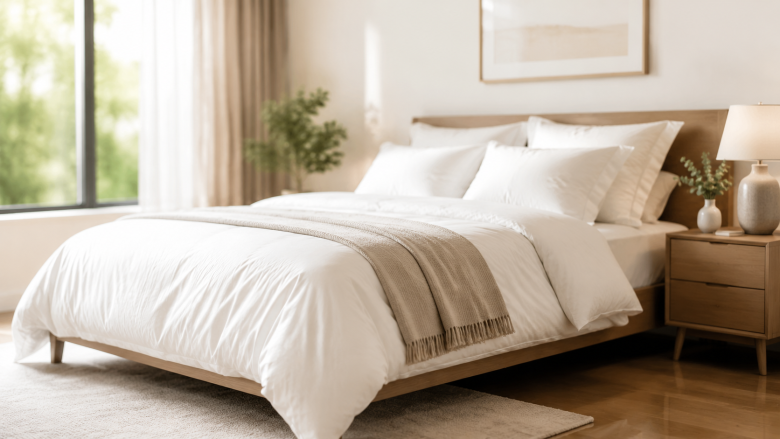
Why Making Your Bed Matters More Than You Think
I used to think making my bed was a pointless chore. When I first tried forcing myself to do it, I made the mistake of pulling the duvet straight over the sheets right after rolling out of bed. Within a week, my pillowcases felt damp, and my allergies flared up. That's when I learned the thing nobody tells you about this habit: the timing and technique matter just as much as the act itself. Done right, making your bed isn't just about tidiness - it's about creating a healthier sleep environment, building momentum for the day, and protecting your respiratory health.
Most people know that making your bed can boost your mood or give you a sense of accomplishment. But the deeper benefits are physical: fewer dust mites, better air quality, and a clear mental boundary between sleep and work. This article blends the latest sleep science with practical habit psychology, giving you a simple framework to make the bed a true sanctuary - not a trap for moisture and allergens.
The Physical Health Payoff: Dust Mites, Allergens, and Air Quality
Your bed is a dust mite paradise. These microscopic creatures thrive in warm, humid environments, feeding on dead skin cells. When you make your bed immediately after waking, you trap the moisture from your body and sweat overnight under the covers. This creates the perfect breeding ground for dust mites. According to a study from the American Academy of Allergy, Asthma & Immunology, dust mite allergens are a primary trigger for asthma and allergic rhinitis.
But here's the counterintuitive twist: leaving your bed unmade allows the sheets to air out, reducing humidity and dust mite survival. A 2005 study from Kingston University in London found that leaving your bed unmade for at least an hour after waking can significantly reduce dust mite populations. However, the study didn't account for the psychological benefits of a made bed. So what's the middle ground?
The 10-Minute Airing Rule
After years of trial and error, I settled on a simple compromise: pull back the covers immediately after getting up, let the bed air for 10 minutes while you brush your teeth or stretch, then make it. This gives moisture a chance to evaporate, cutting down on dust mite habitat, while still reaping the habit benefits. Most people don't realize that a quick airing reduces the risk of mold and mildew in the mattress, especially if you live in a humid climate.
For a deeper look at building consistent morning habits, check out our Habit Score Calculator - it helps you track your progress with routines like this one.
Your Bed as a Sanctuary: Separating Sleep from Work and Screens
One of the most overlooked benefits of making your bed is the psychological separation it creates. Your bed should be for three things: sleep, intimacy, and rest. That's a rule I learned from sleep specialists. When you leave your bed unmade, it becomes an extension of your desk, your couch, or your phone holder. You start eating lunch in bed, scrolling through emails, or watching Netflix until 2 a.m. - all of which erode your brain's association between bed and sleep.
Making your bed each morning signals to your brain: "The sleep zone is now closed for business. Time to engage with the day." This is a classic example of environmental cueing. When you later get into a freshly made bed at night, it feels like a deliberate return to a sanctuary, not just collapsing into a rumpled pile.
How to Design a Bedroom That Supports Sleep
Beyond making the bed, consider what goes on top. A light, breathable duvet or a cotton quilt helps regulate temperature. Avoid using your bed for work - even if you're in a small apartment, designate a separate chair or desk for laptop use. If you're looking for a relaxing evening routine to prepare for sleep, our Gratitude Journaling Routine Before Bed pairs perfectly with a made bed to reinforce the wind-down ritual.
The Keystone Habit Effect: Why Making Your Bed Unlocks Morning Momentum
You've probably heard this before: making your bed is a "keystone habit" that triggers a cascade of positive behaviors. But there's a nuance most articles miss. It's not enough to just make the bed - you need to pair it with a specific cue and reward.
Behavioral scientist B.J. Fogg's model says that habits stick when you have a tiny behavior (like pulling up the duvet), a clear anchor (like after you brush your teeth), and an immediate celebration (like a fist pump or a mental "good job"). I've found that if I make my bed right after my morning glass of water, I'm far more likely to stick with it than if I try to do it after checking my phone.
The 2-Minute Rule for Reluctant Mornings
When I feel lazy, I use the 2-minute rule: just make the bed for two minutes. That's it. Usually, once I start, I finish the whole thing. But if I don't, I still get a small win. Over time, this micro-habit builds consistency. The key is to remove friction: have a duvet that's easy to straighten, avoid complex layers of pillows, and keep your bed frame clear of clutter.
What can go wrong? If you overcomplicate your bed-making process - hospital corners, six decorative pillows, a throw blanket that needs precise folding - you'll avoid it. Keep it simple: a flat sheet, a duvet, two pillows. That's all you need.
Practical Habit Formation: A 3-Step Micro-Habit Framework
Most people fail at making their bed because they treat it as a monolithic task. Here's a framework I've used with clients and myself. It's based on the cue-routine-reward loop from Charles Duhigg's work, but adapted for real-world imperfection.
- Step 1: Anchor the Cue - Choose a specific trigger that happens every morning without fail. For me, it's turning off my alarm. For you, it might be walking into the bathroom. The cue must be something you already do automatically.
- Step 2: Simplify the Routine - Strip the bed-making down to the minimum viable version. Only make the bed when you're wearing clothes (no temptation to crawl back in). Use a duvet that doesn't require a separate top sheet if that's easier. The routine should take less than 60 seconds.
- Step 3: Celebrate Immediately - After you pull the covers up, say a quick affirmation like "I'm starting the day strong" or simply nod and smile. This releases a small dopamine hit that reinforces the behavior. Over time, your brain will crave that feeling.
For a detailed habit tracking tool, explore our Habit Score Calculator - it lets you score your consistency and adjust your approach.
Addressing the Debate: To Make or Not to Make Immediately?
I've read conflicting advice: some say make it right away to build discipline, others say let it air for health. The truth is, both are right depending on your context. If you live in a dry climate with low humidity, immediate bed-making is fine. If you're in a humid area or you sweat a lot at night, airing for 10-15 minutes is wise.
There's also the personality factor. If you're a morning person who thrives on order, making the bed immediately might boost your mood. If you're more laid-back, the 10-minute delay might feel less forced. The key is to experiment and find what works for you, not to follow a rigid rule.
What About the "Don't Make Your Bed" Studies?
You may have seen headlines claiming that unmade beds are healthier. That's based on the Kingston University study, but it's often misinterpreted. The study found that leaving the bed unmade allows moisture to escape, reducing dust mites. But the authors also noted that a fully unmade bed can collect more dust from the air. The real takeaway is: air the bed, then make it. That's the sweet spot.
Long-Term Behavioral Science: Beyond the First Day
Making your bed consistently for a week is easy. Making it for a year is a different story. The secret is habit stacking - attaching the new habit to an existing one. For example, after you pour your morning coffee, make the bed. Or after you use the bathroom, make the bed. The more specific the stack, the more automatic it becomes.
Another technique is to use a "don't break the chain" calendar. Mark an X on each day you make the bed. Seeing a long chain of X's is motivating. If you miss a day, don't guilt-trip yourself - just start again the next day. The goal is not perfection, but consistency over time.
And if you're struggling with morning energy, consider pairing bed-making with a physical activity. Our Short Daily Walk Habit guide shows how a 5-minute walk after making your bed can double the dopamine boost.
Personalizing the Habit: For Different Lifestyles
Not everyone has the same bed situation. If you share a bed with a partner who gets up later, you can still make your side of the bed. Or ask your partner to make the bed on their schedule. If you have a bunk bed or a lofted bed, make it simple: just smooth the sheets and fold the duvet. The point is intention, not perfection.
For people with allergies or asthma, the 10-minute airing rule is non-negotiable. I also recommend washing your sheets weekly in hot water (at least 130°F or 54°C) to kill dust mites. Using allergen-proof covers on pillows and mattresses also helps. Making the bed becomes part of a larger hygiene routine - not just a cosmetic fix.
Common Misconceptions About Making Your Bed
Let's clear up a few myths:
- Myth: Making your bed wastes time. Truth: It takes less than 60 seconds for a standard bed. You spend more time scrolling through your phone.
- Myth: A made bed is just for show. Truth: It reduces dust accumulation on the sheets because the duvet acts as a cover. It also makes the room feel larger and more organized.
- Myth: You must use hospital corners. Truth: No. Just smooth it out. Perfectionism kills habits.
- Myth: Making your bed traps bed bugs. Truth: Bed bugs are not deterred by made or unmade beds. They hide in mattress seams regardless. Focus on prevention and regular inspection.
When to Skip Making Your Bed (Yes, It's OK)
There are genuine exceptions. If you're sick and need to rest during the day, leaving the bed open is fine. If you're washing sheets, obviously don't make it. If you're moving out, no need. The habit should serve you, not the other way around. The moment you feel guilty about skipping it, you're doing it wrong. This is a tool, not a rule.
Final Thoughts: Make It Work for You
The real benefit of making your bed isn't the tidy room - it's the daily reminder that you have control over your environment. It's a small act of self-care that pays dividends in sleep quality, allergy reduction, and mental clarity. Start with the 10-minute airing rule, keep it simple, and stack it onto an existing habit. Within a month, you'll wonder how you ever lived without it.
And if you want to build on that morning momentum, don't forget to check out our guide on How to Make Energizing Smoothies in Minutes - another quick win that complements a made bed.