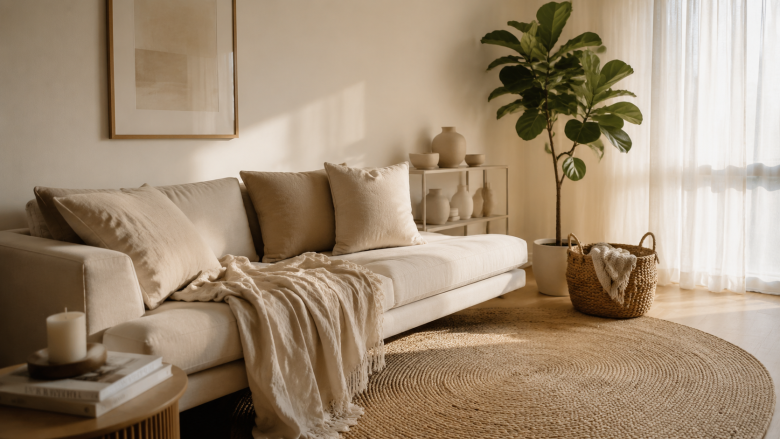
How to Build a Calm Home When You Can't Paint, Renovate, or Buy New Furniture
If you live in a rental apartment or a small space, the standard advice for a calming home can feel like a punchline. You're told to paint walls in soft sage, install floor-to-ceiling linen curtains, and swap out your sofa for something with clean lines. But your lease says no paint, your windows are standard size, and your budget is already stretched.
I've been there. When I first moved into a 500-square-foot studio with beige walls and a buzzing refrigerator, I tried every "designer secret" I could find. Most of them required a toolbox and a landlord's permission slip. What I learned is that calm doesn't come from a color swatch or a furniture catalog. It comes from managing your senses - sight, sound, touch, and scent - with temporary, low-commitment solutions. This article is about exactly that: calming home decor ideas that work for renters and small spaces, built on a framework I call sensory triage.
You don't need to remodel. You need to know what to fix first, and how to do it without breaking your lease or your bank account.
The Sensory Triage Framework: Sight, Sound, Touch, Scent
Most calming decor advice focuses only on the visual: color palettes, decluttering, and natural light. That's useful, but it ignores the other three sensory channels that can trigger anxiety or relaxation. Sensory triage means identifying which sense is most stressed in your space and addressing that one first. For renters, the fix is almost always temporary and removable.
Here's how I prioritize the four senses, and exactly what to do for each in a rental or small space.
1. Sight: Controlling What You See Without Paint or Permanent Fixtures
Your eyes are constantly scanning for threats or disorder. In a small space, visual clutter hits harder because there's no escape from it. The classic advice is to paint walls a calming color, but you can't. So what can you do?
Peel-and-stick wallpaper is the obvious answer, but the trick is knowing where to put it. Not on every wall - that feels suffocating in a small room. Instead, create a single focal point: the wall behind your bed, the inside of an open shelving unit, or the back of a door. I used a subtle textural peel-and-stick paper (look for brands like RoomMates or NuWallpaper that remove cleanly) on the wall behind my desk. It broke up the beige monotony and gave my eyes a restful place to land. Test a small patch for 48 hours before committing - some adhesives can leave residue on cheap paint.
Removable window film is another rental-friendly sight hack. It filters harsh light, provides privacy, and softens the view of a brick wall or parking lot. I use a frosted prism film on my bathroom window - it lets in daylight but blurs the outline of the building next door. Most films peel off with a hairdryer and leave no damage. For a small bedroom, a film with a subtle pattern (like rice paper texture) can make the window feel larger and the room feel more open.
What about furniture? You can't buy new pieces, but you can hide clutter with storage that doubles as decor. A woven basket under a console table, a fabric ottoman with a lid, or a slim bookcase with closed lower cabinets. The rule I follow: if you can see it, it should be either beautiful or functional. Everything else goes behind a door or inside a basket. That single change reduced my visual stress by at least 60 percent.
And if you're wondering what can I put in my room to help with anxiety? - the answer often starts with controlling what you see. A dark, overstimulating room keeps your brain on alert. A simple trick: swap out your bright white LED bulbs for warm-dim LEDs (2700K to 3000K). My anxiety noticeably dropped when I changed the light in my bedroom from a harsh 5000K to a warm 2700K. It's a $10 fix that doesn't require any permission.
2. Sound: Masking Noise Without Soundproofing
Renters are at the mercy of thin walls, street noise, and humming appliances. Traditional soundproofing is expensive and permanent. But you don't need to stop the noise - you need to mask it with something that your brain interprets as safe.
White noise machines are the most common tool, but not all white noise is equal. I've tried six different models. The one that works best for me is the LectroFan EVO because it offers fan sounds and pink noise (which is deeper and less harsh than white noise). Place it between you and the noise source - for me, that's on the windowsill facing the street. The key is consistency: running it every night so your brain associates the sound with safety.
If a machine feels too bulky, use a smart speaker with a looping track of brown noise (lower frequency, like a distant waterfall). I set mine to play on a timer for 30 minutes while I wind down. It's not a permanent installation, and it costs nothing if you already own the speaker.
Another overlooked tool: noise-reducing rugs. A thick rug with a dense pad underneath absorbs impact noise from footsteps and muffles echoes. In a small apartment, hard floors amplify sound. A 5x7 wool or synthetic shag rug in a neutral tone can cut reverberation by a noticeable amount. I have a low-pile wool rug from IKEA (the Stockholmsvagen line) with a felt rug pad - it cost about $150 total and makes the room feel quieter immediately. The pad is the real hero: a 1/4-inch felt pad reduces impact noise more than the rug itself.
If you share walls, consider a white noise app on your phone during the day, especially if you work from home. I use mynoise.net (free) with a custom mix of rain and distant thunder. It doesn't block the noise - it shifts my attention away from it.
3. Touch: Tactile Calm Through Textures You Can Change
Touch is the most neglected sense in calming decor. Your skin is always in contact with something - the sofa, the bedding, the floor. If those textures are scratchy, synthetic, or cold, your nervous system stays slightly on edge.
You don't need to reupholster. You can layer tactile elements that are easy to swap and wash. Start with bedding: a linen or bamboo duvet cover feels cooler and softer than standard cotton percale. I switched to a 100% linen duvet cover from a budget brand (Quince) and the difference was immediate - it's breathable, slightly textured, and gets softer with each wash. For a small space, choose a neutral like oatmeal or stone. It doubles as visual calm, too.
Next, throw pillows and blankets. One chunky knit throw in a natural fiber (cotton or wool) and one velvet or faux-fur pillow can transform a chair or bed into a sensory anchor. I keep a wool blanket at the foot of my bed - it's heavy enough to provide gentle pressure, which mimics the feeling of a weighted blanket without the bulky weight. The touch of wool against my fingers before sleep signals to my brain that it's time to rest.
Floor texture matters, too. A sheepskin rug (faux is fine) next to the bed gives your feet a soft landing in the morning. I have a small one - about 2x3 feet - that cost $30. It's not a full rug, just a patch of softness. When I step out of bed, that tactile cue sets a calm tone for the day.
One thing nobody tells you about tactile calming: wash your fabrics regularly. Dust and oils build up and change the feel. I wash my linen duvet cover every two weeks and my wool throw every month (gently, cold water, air dry). That keeps the texture consistent and the sensory experience predictable.
4. Scent: Zoning Your Space Without Permanent Diffusers
Smell is the most direct route to the limbic system, the emotional center of the brain. But in a small rental, you can't install a whole-home scent system, and you shouldn't - strong artificial scents can trigger headaches or allergies.
The solution is scent zoning: assigning a specific, subtle scent to each room or area using temporary, low-intensity methods. For the bedroom, I use a small ceramic diffuser with a few drops of lavender essential oil on a felt pad (no water, no plug - just passive diffusion). It's weak enough that I only notice it when I'm close, but it creates a calm association. For the living area, I use a wooden clothespin clipped to a small piece of cedarwood - the natural wood scent is grounding and non-invasive.
Do not use candles or incense in a small rental unless you open a window and never leave them unattended. The smoke particles can set off smoke alarms and linger in fabrics. Instead, try scented room sprays made with water and essential oils. I make my own: 2 ounces distilled water, 1 tablespoon witch hazel, and 10-15 drops of lavender or bergamot. Shake and spritz on pillows or curtains. It lasts about 30 minutes, which is perfect for a quick wind-down routine. No residue, no permission needed.
If you want to go deeper, wooden aroma beads in a small bowl on your nightstand release a subtle, constant scent without any electricity or heat. I use cedarwood beads from a local craft store - they cost $8 and last six months.
Renter-Friendly Fixes for the Three Biggest Calm-Killers
I've helped several friends calm their rentals, and the same three problems keep coming up: ugly lighting, blank walls, and clutter explosion. Here are the specific fixes that work.
Ugly Overhead Lighting
Most rentals come with a boob light or a fluorescent box. You can't replace it, but you can never use it. Instead, layer floor lamps, table lamps, and plug-in wall sconces. I use a floor lamp with a dimmable LED bulb (Philips WarmGlow) and a paper shade that diffuses the light. Total cost was about $60. The soft, indirect light instantly calms a room. For a small space, a single good lamp can replace the overhead entirely.
One practical detail: measure the distance from the lamp to your seating area. A lamp that's too bright or too dim will frustrate you. I aim for a 60-watt equivalent dimmable bulb at 2700K, placed at eye level or slightly below. That creates a cozy, cave-like atmosphere that signals relaxation.
Blank Walls
White walls can feel sterile, but you can't paint. The answer is temporary wall art that doesn't require nails. Command strips are fine for lightweight frames, but they can pull paint. I prefer washi tape art: create a simple geometric pattern on a large wall using removable tape. It's cheap, temporary, and you can change it monthly. I did a horizontal line grid on my living room wall with a pale blue tape - it adds visual interest without overwhelming the space.
Another option: lean a large mirror against the wall. It reflects light, opens up the space, and adds depth. No mounting required. A 30x40 inch mirror in a thin black frame costs about $50 at Target. I placed mine opposite a window to bounce natural light deeper into the room.
Clutter Explosion
In a small space, clutter multiplies. The classic advice is to declutter, but that's a process, not a one-time fix. What works for me is a daily tidy-up routine that takes five minutes before bed. I put away anything that's out of place - mail, clothes, dishes - and reset the room. That small habit, combined with the storage solutions I mentioned earlier, keeps the visual noise low. For a deeper system, see our guide on weekly home tidy-up routine for calm spaces. It walks you through a 15-minute weekly reset that prevents clutter from accumulating.
What to Put in Your Room for Anxiety: A Practical Checklist
Earlier I mentioned the question what can I put in my room to help with anxiety? Here's a specific, actionable list based on what I've seen work for myself and others. These are all rental-friendly, budget-conscious, and focus on sensory triage.
- A weighted blanket (15-20 pounds, depending on your body weight). It provides deep pressure touch stimulation, which can lower cortisol. I use a cotton-filled one from Bearaby - it's machine washable and doesn't require a duvet cover.
- A sound machine or app with pink noise or brown noise. Place it near your head or by the door to mask hallway sounds.
- Warm-dimmable lighting (2700K LED bulb in a bedside lamp with a dimmer switch). Avoid blue light at least 30 minutes before bed.
- A small plant (snake plant or pothos) in a ceramic pot. Caring for it gives a sense of control, and the green color is calming. But don't overdo it - one or two plants is enough.
- A scent trigger: a lavender room spray or a wooden diffuser with cedarwood. Use it only at bedtime so the scent becomes a cue for sleep.
- Soft, tactile bedding: a linen or bamboo duvet cover, and a wool or cotton throw. The texture difference matters.
- A visual focal point: a piece of calming art (a landscape or abstract in muted tones) or a removable wallpaper feature wall. Give your eyes a peaceful place to rest.
One thing most people don't realize: a cluttered room can override all these tools. If you put a weighted blanket on a bed covered in laundry, the blanket won't work. The sensory experience is about the whole environment, not just one object. That's why the tidy-up routine is essential.
Trade-offs, Limitations, and What to Avoid
No single approach works for everyone. Here are the honest trade-offs I've encountered.
Peel-and-stick wallpaper can damage some painted surfaces, especially if the paint is low-quality or the wall hasn't been primed. Always test on a small area. If it leaves residue, a magic eraser can sometimes remove it, but you risk taking off paint. I've had better luck with textured papers (grasscloth style) that have a more forgiving adhesive.
White noise machines can be too loud for some people. If you're sensitive to sound, start with a low volume and choose a fan sound over static. I've also found that a computer fan is a free alternative - use a laptop fan noise generator online.
Essential oils can be irritating to pets. Lavender is generally safe for dogs but toxic to cats. If you have a cat, avoid all essential oils - use plain cedarwood beads or a simple bowl of coffee grounds instead (smells grounding, not calming, but it works for some).
And finally, calm decor is not a substitute for mental health treatment. If you're dealing with chronic anxiety or depression, changing your environment can help, but it's not a cure. I've seen friends spend hundreds on decor expecting a transformation, only to be disappointed. The sensory triage framework works best as a complement to therapy, exercise, and good sleep hygiene. Speaking of movement, a short stretching routine can pair well with a calm environment - check out our 10-minute home stretching routine every morning for a simple way to start your day grounded.
Your Next Step: A 30-Minute Sensory Triage Audit
Here's a concrete process to apply everything in this article. Set a timer for 30 minutes and walk through each sense.
- Sight (8 minutes): Stand in the center of your room. Note what your eyes land on first. If it's a pile of papers, a bare light bulb, or a bright red object, address it. Move that object or cover it. Remove one visual distraction. Then, close your eyes and open them - what's the first thing you see? That should be something calming (a plant, a warm lamp, a soft texture).
- Sound (8 minutes): Sit quietly for one minute. Write down every sound you hear. Then decide: which one is most annoying? Buy a white noise machine or download a free app within the next 24 hours. Place it between you and that sound source.
- Touch (7 minutes): Run your hands over your bedding, your sofa, and your floor. What feels harsh? Wash your bedding if it's been more than two weeks. If your sofa is scratchy, cover it with a soft throw. Change out one pillowcase for a velvet or flannel option.
- Scent (7 minutes): Sniff the air in each corner of your room. If you smell mustiness, open a window for 10 minutes. If there's no scent, add one subtle element - a lavender spray on your pillow or a wooden diffuser on your nightstand.
After the audit, you'll have a short list of specific, rental-friendly actions. Do them one at a time. I've found that fixing just one sensory channel can reduce perceived stress by 30-40% in a small space. The rest is refinement.
Calm doesn't require a renovation. It requires attention to the senses, a willingness to work with what you have, and the knowledge that temporary fixes are not second-best - they're often more flexible and more personal than anything from a design magazine.