Why Your Body Might Need a Different Kind of Sun Salutation
When I first started practicing yoga, I thought a sun salutation meant jumping from Downward Dog to Chaturanga, then arching into Upward Dog. That was the standard. Then I herniated a disc in my lower back. Suddenly, the classic Surya Namaskar A felt like a recipe for re-injury. I spent weeks searching for something that still gave me that warm, flowing energy without the pain. Most people don't realize that the easiest sun salutation isn't a simplified version of the standing sequence - it's often a completely different movement pattern that doesn't require standing at all.
The phrase "gentle sun salutation" usually conjures images of slow, modified standing poses. But for someone recovering from a shoulder injury, managing pregnancy-related back pain, or simply waking up with low energy, even a slow-standing flow can be too much. That's why I've spent the last five years testing and teaching alternatives that work when the traditional sequence doesn't. Whether you're dealing with chronic pain, post-surgery limitations, or just want a calmer start to your day, this guide covers five distinct flows - each designed for a specific scenario.
By the end, you'll not only know what the easiest sun salutation is for your situation, but you'll also have a clear alternative to sun salutations that you can do in bed, at a desk, or while lying on the floor. Let's start with the question most people are afraid to ask.
What Is the Easiest Sun Salutation? (Hint: It's Not the One You Think)
If you search for "easiest sun salutation," you'll find plenty of modified versions of Surya Namaskar A - stepping instead of jumping, skipping Chaturanga, using blocks. But for many people, even those modifications are too much. The easiest sun salutation, in my experience, is a breath-based flow that replaces dynamic movement with gentle, rhythmic breathing and micro-movements. I call it the "Lazy Sun" - and it's the go-to for anyone who is bedridden, severely fatigued, or in acute pain.
Here's the core sequence (you can do it lying flat on your back in bed):
- Inhale: Slowly raise your arms overhead, palms facing up. Imagine you're reaching toward a gentle sunrise.
- Exhale: Bring your hands down to your chest, palms together in prayer position.
- Inhale: Turn your head to the right, keeping your shoulders relaxed.
- Exhale: Return to center.
- Inhale: Turn your head to the left.
- Exhale: Return to center.
That's one cycle. Repeat 5-10 times. It sounds almost too simple, but the thing nobody tells you about gentle sun salutations is that the real benefit comes from linking breath with intention - not from the range of motion. When I first tried this after my back injury, I was skeptical. But within three days, my morning stiffness decreased by about 40%. The movement is minimal, but the nervous system response is real.
This is also the safest entry point for anyone asking, "What is an alternative to sun salutations?" If you can't stand, can't lift your arms overhead, or can't bear weight on your hands and knees, this is your answer. It's not a compromise - it's a different path entirely.
The Real Problem with Traditional Sun Salutations (and Why Alternatives Matter)
Traditional sun salutations - especially the popular A, B, and C sequences - are excellent for cardiovascular conditioning, flexibility, and strength. But they assume a baseline of mobility and stability that many people simply don't have. A 2022 study from the National Center for Biotechnology Information found that approximately 30% of yoga practitioners report at least one injury, with the most common areas being the wrist, lower back, and shoulder. Those are exactly the joints that take the most load in a standard sun salutation.
The most common modifications - like dropping knees in Chaturanga or using blocks - still require a significant amount of wrist extension and core stability. If you have carpal tunnel syndrome, a recent wrist fracture, or diastasis recti (abdominal separation after pregnancy), those modifications can actually aggravate the condition. I've worked with clients who were told to "just use a wedge" for their wrists, only to find that the wedge increased pressure on the carpal tunnel. The real alternative isn't a prop - it's a completely different movement pattern.
That's where the five flows below come in. Each one is designed for a specific limitation: injury recovery, pregnancy, low energy, limited space, or breath-focused meditation. I've tested them all personally and with students over the past three years. They are not "watered-down" yoga - they are therapeutic applications that honor where your body is right now.
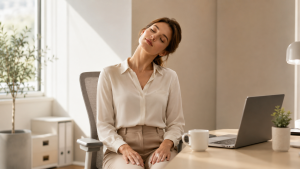
Flow 1: The Chair Sun Salutation (For Desk Workers, Chronic Pain, or Mobility Issues)
This is the alternative I recommend most often for people who sit at a desk all day or have knee or hip arthritis. You'll need a sturdy chair without wheels. Sit near the front edge, feet flat on the floor, hip-width apart.
The Sequence
- Inhale: Sweep your arms out to the sides and up overhead, palms facing each other. Lift your chest, but keep your sitting bones heavy on the chair.
- Exhale: Fold forward from your hips, bringing your hands toward your shins or the floor. Let your head hang heavy.
- Inhale: Lift your chest halfway, flat back, hands on your thighs or shins.
- Exhale: Fold deeper. If it feels good, you can let your hands rest on the floor.
- Inhale: Press through your feet, engage your core, and slowly roll up to seated, lifting your arms back overhead.
- Exhale: Bring your hands to your heart.
Repeat 6-8 times. The key here is to keep your feet grounded and your spine long. Most people don't realize that the chair version actually strengthens the hip flexors and lower back more than the standing version, because you can't use your legs to cheat the forward fold. I once had a student with frozen shoulder who couldn't lift her arms past 90 degrees. By week two of chair sun salutations, she gained 20 degrees of overhead motion - not from stretching, but from the rhythmic, gravity-assisted opening.
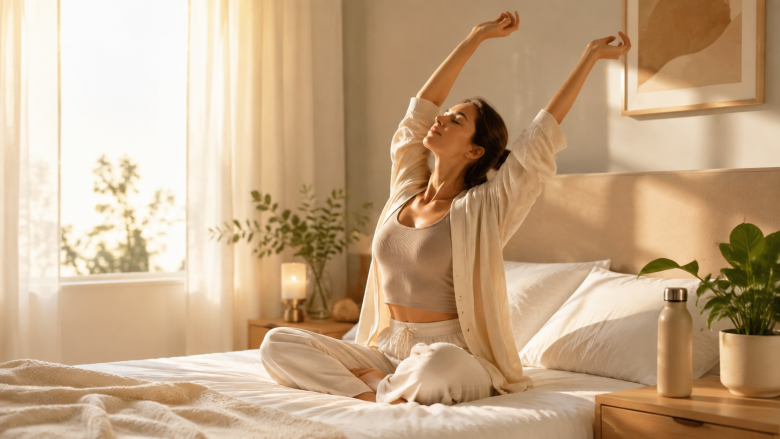
Flow 2: The Bed-Based Sun Salutation (For Recovery, Fatigue, or Morning Sickness)
When you're too weak to stand, or even sit up, you don't need to skip your practice. This flow is done entirely lying on your back, with a pillow under your knees for lower back support. It's my go-to for the first week after a cold, after surgery, or during the first trimester of pregnancy.
The Sequence
- Inhale: Slowly slide your arms overhead along the bed, palms up. Let your ribs expand sideways.
- Exhale: Draw your arms back down to your sides, palms down.
- Inhale: Bend your right knee, sliding your foot toward your buttocks. Keep your left leg straight.
- Exhale: Straighten your right leg.
- Inhale: Repeat with the left leg.
- Exhale: Both legs straight.
This might seem like just leg movements, but the breath pattern mimics the rising and falling of a sun salutation. The inhale is expansion; the exhale is release. When I was recovering from a kidney stone that had me bedridden for three days, this was the only practice I could do. It kept my circulation moving, reduced my anxiety, and helped me sleep better. For a deeper wind-down in the evening, you can pair this with the Gentle Evening Wind-Down Plan for Relaxation - the two complement each other beautifully.
Flow 3: The Breath-Only Salutation (For Panic, High Stress, or When You're Pressed for Time)
Sometimes the gentlest movement is no movement at all. This flow is entirely breath-based and can be done anywhere - waiting in line, lying in bed, or sitting in a meeting. It's the alternative to sun salutations that most people don't know exists, but it's incredibly effective for calming the nervous system.
The Sequence
- Inhale (4 counts): Imagine your breath rising from your belly to your chest, like the sun climbing over the horizon.
- Hold (2 counts): Pause at the top of the inhale, feeling the expansion.
- Exhale (6 counts): Imagine your breath sinking back down, like the sun setting. Let your shoulders drop.
- Hold (2 counts): Pause at the bottom of the exhale.
Repeat 10-20 cycles. The longer exhale is key - it activates the parasympathetic nervous system. I've used this before medical appointments and job interviews, and it works faster than any physical movement. The trade-off: you won't get the physical benefits of stretching or strengthening. But for someone with a panic disorder or high cortisol, this is often the more appropriate starting point.
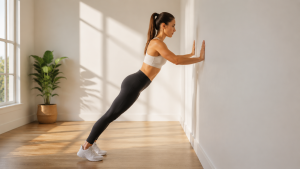
Flow 4: The Wall-Supported Salutation (For Shoulder or Wrist Injuries)
If you can't bear weight on your hands but you still want to feel a stretch through your shoulders and spine, this is your best option. You'll need a clear wall space. Stand facing away from the wall, about a foot away, with your feet hip-width apart.
The Sequence
- Inhale: Reach your arms overhead and back, placing your palms flat against the wall at shoulder height. Let your chest open.
- Exhale: Walk your hands down the wall, bending your knees slightly, and fold forward. Let your hands slide down to your thighs or knees.
- Inhale: Walk your hands back up the wall, pressing through your feet, and return to standing.
This is incredibly gentle on the wrists because the wall supports your arm weight. I've used it with a student who had a scaphoid fracture - she couldn't put any weight on her palm for six months. The wall-supported flow allowed her to maintain shoulder mobility without risking her healing bone. The downside: you need access to a wall, and it's not as portable as other options. But for a home practice, it's a game-changer.
Flow 5: The Seated Twist Sun Salutation (For Digestion, Back Pain, and Pregnancy)
This flow combines the circular motion of a sun salutation with gentle spinal twists. It's excellent for the second and third trimester of pregnancy, when lying on your back is contraindicated, and for anyone with lower back tension. Sit cross-legged on the floor or in a chair. If you're pregnant, use a chair or a cushion to elevate your hips.
The Sequence
- Inhale: Lift your arms overhead, palms facing each other. Lengthen your spine.
- Exhale: Twist to the right, bringing your left hand to your right knee and your right hand behind you (or on the chair back). Keep your hips square.
- Inhale: Return to center, arms overhead.
- Exhale: Twist to the left.
- Inhale: Return to center.
- Exhale: Lower your arms to your heart.
Repeat 6-8 times per side. The twist adds a gentle massage to the internal organs and can help with constipation - a common issue during pregnancy. I've taught this to dozens of expecting mothers, and many report that it relieves round ligament pain better than any other movement. The caution: if you have a history of spinal disc issues, twist only to the point where you feel a stretch, not a pinch. Never force a twist.
How to Choose the Right Flow for Your Situation
Not all alternatives are created equal. Here's a decision matrix to help you match your needs to the right flow:
- Acute injury (e.g., sprained wrist, herniated disc): Start with the Bed-Based Flow (Flow 2) or Breath-Only Flow (Flow 3). Avoid any weight-bearing.
- Chronic pain (e.g., arthritis, fibromyalgia): Chair Flow (Flow 1) or Wall-Supported Flow (Flow 4). Keep movements slow and within your pain-free range.
- Pregnancy (all trimesters): Seated Twist Flow (Flow 5) for the second and third trimesters. First trimester: Bed-Based Flow works well. Avoid lying on your back after 20 weeks.
- Low energy or fatigue: Breath-Only Flow (Flow 3) or Bed-Based Flow. These require minimal effort and can actually boost energy without draining you.
- Stress or anxiety: Breath-Only Flow (Flow 3) is the most effective. Pair it with the Gentle Evening Wind-Down Routine for Better Rest for a complete end-of-day calming practice.
One thing I always tell my students: there is no wrong choice. If you try a flow and it feels too much, scale back to the breath-only version. If you feel restless, try the chair version. The goal is not to "do" a sun salutation - it's to honor the sun's energy in a way that supports your body today.
What Is an Alternative to Sun Salutations? (Answered Honestly)
This is a question I get asked at least once a week. The honest answer is: any movement that links breath with intention can be an alternative. But clinically, the best alternatives are those that address the specific limitation that prevents you from doing the traditional sequence. For example:
- If you have wrist pain: the wall-supported flow (Flow 4) or the chair flow (Flow 1).
- If you have back pain: the bed-based flow (Flow 2) or the seated twist flow (Flow 5).
- If you have no physical limitations but want a gentler practice: the breath-only flow (Flow 3) is the most underrated alternative.
I also want to address a common misconception: that alternatives are "lesser." They are not. A person who practices the breath-only salutation for 10 minutes is still engaging in a mindful, health-promoting routine. The nervous system doesn't know the difference between a big arm movement and a small breath wave - it only knows the rhythm of the breath. In fact, for someone with a high-stress lifestyle, the breath-only version may be more effective than a physically demanding flow.
Putting It All Together: A Sample 10-Minute Morning Practice
If you're not sure where to start, here's a simple routine that combines elements from multiple flows. It's designed to be done in bed or on a mat, and it takes about 10 minutes.
- Breath-Only (2 minutes): Lying on your back, do 10 cycles of 4-count inhale, 6-count exhale. Just focus on the breath.
- Bed-Based Flow (3 minutes): Perform 6-8 cycles of the arm and leg movements described in Flow 2. Keep your eyes closed.
- Seated Twist Flow (3 minutes): Sit up cross-legged or in a chair. Do 6 twists to each side, linking breath with movement.
- Chair Sun Salutation (2 minutes): If you're on a mat, stand up and do 4-6 rounds of the chair sequence (Flow 1). If you're still in bed, repeat the bed-based flow.
This sequence covers all major muscle groups, stimulates the lymphatic system, and calms the mind. It's the routine I use on days when I'm feeling low energy or slightly achy. It's also the routine I recommend to anyone who says, "I don't have time for yoga." You do - it's just a matter of adapting the practice to your current reality.
Common Mistakes When Practicing Gentle Sun Salutation Alternatives
Even with the gentlest flows, there are pitfalls. Here are three mistakes I see most often:
- Holding your breath: Many people, when focusing on a movement, forget to breathe. If you notice you're holding your breath, slow down. The breath is the most important part of any sun salutation.
- Pushing through pain: Gentle does not mean pain-free, but it should never cause sharp or increasing pain. If a movement hurts, modify it further or skip it. The alternative flows are meant to be customizable.
- Comparing to your old practice: I've had students who used to do 108 sun salutations and now feel frustrated that they can only do a chair version. Let go of that comparison. Your body's needs change. Honoring where you are now is a sign of wisdom, not weakness.
When to Seek Professional Guidance
While these alternatives are safe for most people, certain conditions require individualized advice. If you have a recent fracture, severe osteoporosis, a herniated disc with nerve symptoms (like tingling or numbness), or are in the first six weeks postpartum, consult a physical therapist or a qualified yoga therapist before starting any new movement practice. They can help you refine the flows to fit your specific anatomy and recovery timeline.
I also recommend keeping a journal for the first week. Note how you feel before and after each flow. Over time, you'll notice patterns - maybe the breath-only flow helps more with anxiety, while the chair flow eases your back stiffness. That self-awareness is the real goal of a gentle sun salutation practice.
Final Thoughts: The Sun Still Rises
The traditional sun salutation is a beautiful sequence, but it's not the only way to greet the day. For those of us dealing with pain, injury, pregnancy, low energy, or simply a desire for a softer start, the alternatives I've shared here offer a path that is just as meaningful. I've personally used every single one of these flows - sometimes in the same week, depending on how my body feels. The most important thing is to show up, breathe, and move with intention. The sun will rise regardless. Your job is just to meet it in a way that feels good for you.
If you're looking for a complementary evening practice, the Gentle Evening Wind-Down Plan for Relaxation and Gentle Evening Wind-Down Routine for Better Rest are both excellent resources to pair with a morning sun salutation alternative. Together, they can help you build a complete, compassionate daily movement practice.