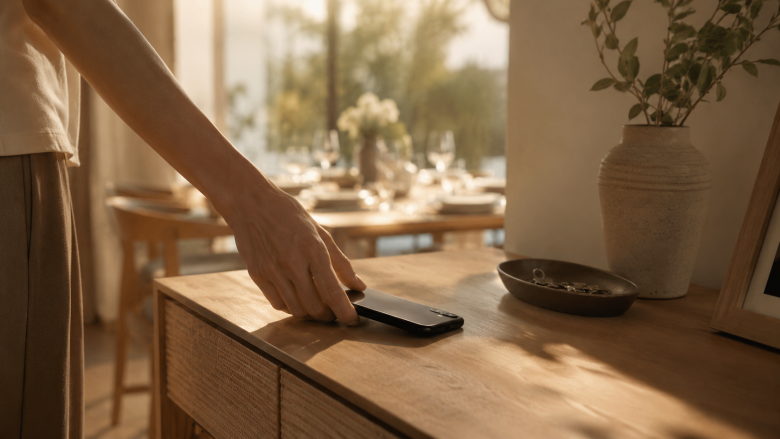
Why "Phone Away Before Dinner" Changed My Evenings
Two years ago, I sat down for a family dinner at my sister's house. My niece, then 14, had her phone face-up on the table next to her plate. Every few minutes she glanced at the screen, her fork hovering mid-air. The conversation felt like a series of interruptions. I tried a gentle nudge: "Hey, how about we put those away until after dessert?" She rolled her eyes but complied. What happened next surprised me. Within ten minutes, she was laughing at a story about her dad's failed attempt at baking sourdough. The meal stretched into an hour of genuine connection.
That night, I noticed something else: my niece fell asleep earlier than usual. She told me the next morning she felt less "wired" and had actually dreamed. That's when I started digging into the link between dinner phone habits and sleep. Most people treat "phone away before dinner" as a simple etiquette rule. But the real payoff isn't politeness-it's a cascade of physiological changes that prepare your brain for rest. This article walks you through the science, the practical enforcement, and the three-step transition I now use with my own family.
The Hidden Connection: Dinner Phone Habits and Sleep Hygiene
When you scroll through your phone during dinner, you're not just annoying your dining companions. You're exposing your eyes to blue light at a time when your body should be winding down. The Harvard Health Letter explains that blue light suppresses melatonin production more than any other wavelength. A dinner that starts at 6 or 7 PM is often the last significant light exposure before bedtime. If you're staring at a screen during that meal, you're essentially telling your brain: "Stay awake, it's still daytime."
The thing nobody tells you about phone use at dinner is that it's not just the light-it's the cognitive load. Scrolling through work emails, social media arguments, or even a captivating news article triggers a stress response. Your cortisol levels rise, your heart rate increases, and your digestive system gets pushed to the background. This is the opposite of the parasympathetic "rest and digest" state you want before sleep. As we covered in our guide to Simple Family Dinner Prep Routine Weekly, a calm meal environment starts long before you sit down. Removing phones is the single most effective way to protect that calm.
When Should You Put Your Phone Away at Night? (The Answer Starts at Dinner)
Most people ask, "When should I put my phone away before bed?" and expect an answer like "30 minutes before." But the truth is more nuanced. If you're scrolling during dinner at 7 PM, you've already lost the optimal window for melatonin onset. The National Sleep Foundation recommends avoiding screens for at least one to two hours before sleep. But that recommendation assumes you stop at 9 PM for an 11 PM bedtime. If dinner is your last major activity before your wind-down routine, then dinner is the time to start the digital detox.
I've tested this on myself. For a month, I kept my phone in the kitchen drawer during dinner, then allowed myself 30 minutes of screen time afterward. My sleep quality was mediocre. Then I extended the rule: no phone from dinner until breakfast. The difference was dramatic. I fell asleep faster, woke up less during the night, and felt more rested. The key insight is that the dinner table isn't just a meal-it's a transition point. If you can establish a "no phone zone" from that moment forward, you're giving your brain a solid 3-4 hours of low-light, low-stress time before sleep.
What Is the Cell Phone Etiquette for Dinner? (Beyond the Basics)
You've heard the standard rules: keep it silent, face down, in your pocket or bag. But the real etiquette goes deeper, especially in different contexts. Let me break down what works in three common scenarios.
Family Dinner at Home
This is the easiest place to enforce a rule, but it's also where resistance is highest-especially with teenagers. The common mistake is making it a punishment. Instead, frame it as a shared experiment. Say: "Let's try 30 minutes without phones and see if the conversation changes." Most people don't realize that teens often escape to their phones because they feel awkward or bored. By removing the phone, you're forcing a social skill that needs practice. Have a backup activity ready-a question jar, a card game, or a story prompt. We use a "High-Low" round where everyone shares one high and one low of their day. It's simple and effective.
Business Dinner
Professional dinners are trickier because you might need your phone for emergencies or to show information. The etiquette here is to announce your intention upfront. As you sit down, say: "I'm going to put my phone on silent and face-down. If you need to take a call, please feel free to step away." This sets a norm without being preachy. I once had a client who kept his phone face-up on the table, glancing at it every two minutes. I finally said, "I can see you're waiting for something important. Let's pause and you can handle it." He admitted he was nervous about a deal closing. We handled it, put the phone away, and the rest of the dinner was productive. The lesson: don't ignore the phone-address the need behind it.
Date Night
Romantic dinners are where phone etiquette can make or break the mood. The standard advice is to leave phones in the car or at the host stand. But if you're a parent with a babysitter, you need to be reachable. The compromise: put both phones in a stack in the middle of the table, face-down, on silent. If either buzzes, you can glance at the screen without picking it up. This signals that the person in front of you is the priority. I've used this on dates and it works beautifully-it's a visual agreement that says "we're both in this together."
How to Avoid Radiation from Cell Phones at Night (And Why Dinner Is a Good Time to Start)
The question of cell phone radiation and sleep is a hot topic. The World Health Organization classifies radiofrequency radiation as possibly carcinogenic (Group 2B), but the evidence is mixed. What's clearer is that the proximity of a phone to your head during sleep can disrupt sleep architecture, even if the radiation risk is minimal. A study in the Journal of Clinical Sleep Medicine found that people who kept their phones in the bedroom had significantly poorer sleep quality, independent of screen use.
Starting the "phone away" habit at dinner reduces the likelihood that you'll bring it to the bedroom. I keep a charging station in the living room, and at dinner, everyone places their phone there. It stays there until the next morning. This physically separates you from the device during the entire evening wind-down. If you're worried about emergency calls, configure your phone to allow calls from a few trusted contacts to bypass silent mode. My parents have a special ringtone, so I know if they call, it's urgent.
Why You Should Not Put Your Phone Face Up on the Table
This is a subtle but powerful piece of etiquette. When your phone is face-up, even on silent, you can see notifications light up. That triggers a dopamine hit-a tiny anticipation of reward. Your brain shifts attention from the person in front of you to the potential message. A study from the University of Southern California found that the mere presence of a phone on the table reduced conversation quality, even when it was turned off. The face-up position amplifies this because you're visually aware of every ping.
Putting the phone face-down doesn't solve the notification problem if it's still on vibrate. You'll feel the buzz. The best approach is to put it in a bag or another room. But if you must keep it on the table, face-down with silent mode and no vibration. The thing nobody tells you about this is that the orientation matters for your plate too. If your phone is face-up, you're subconsciously orienting your body toward the screen, not the person across from you. Try it tonight: face-down, and notice how much easier it is to maintain eye contact.
The 3-Step Digital Wind-Down: From Dinner to Bedtime
Here's the framework I've developed and refined over the past year. It's not a rigid schedule-it's a sequence that you can adapt to your lifestyle. The goal is to use dinner as the trigger for a cascade of low-tech activities that lead to restful sleep.
Step 1: Dinner Off (Phone-Free Meal)
This is the non-negotiable. At the start of dinner, everyone places their phone in a designated spot-a basket, a drawer, or a charging station in another room. No exceptions. If you're dining alone, this is even more important because you're likely to default to a screen. Instead, use the time to practice mindful eating. Chew slowly, notice flavors, and pay attention to your body's fullness cues. This step alone improves digestion because your parasympathetic nervous system is activated.
What can go wrong: You'll feel a phantom buzz or an urge to check. That's normal. The first few nights, it's uncomfortable. I remember a dinner where I actually reached for my pocket out of habit. The key is to recognize the urge and not act on it. After a week, the urge fades. If you have kids, expect resistance. My niece initially complained that dinner was "boring." I countered by starting a tradition: each person brings a fun fact or a question. It became a game, and now she looks forward to it.
Step 2: Wind-Down Activities (Low-Tech Evening)
After dinner, resist the temptation to pick up your phone. Instead, engage in a wind-down activity that doesn't involve screens. This could be a walk, reading a physical book, journaling, playing a board game, or doing a puzzle. The goal is to keep your brain in a relaxed, low-arousal state. Blue light exposure is still a problem if you watch TV, but it's less intense than a phone screen held close to your face. If you watch TV, sit at least 6 feet away and use a warm color setting.
I've found that a 10-minute walk after dinner is incredibly effective. It aids digestion, gets you out of the house, and gives you a natural transition from meal to evening. If the weather is bad, I do a simple stretching routine or clean the kitchen while listening to an audiobook (no screen). The key is to avoid any activity that requires you to stare at a bright, small screen. This step is the bridge between the social dinner and the solitude of sleep.
Step 3: Bedtime No-Phone Zone (The Final Lockdown)
Thirty minutes before your target bedtime, put your phone on a charger outside the bedroom. I use a charging station in the hallway. No phone in the bedroom-ever. This is the most important step for sleep hygiene. The bedroom should be associated only with sleep and intimacy. If you need an alarm clock, buy a cheap digital one. If you read before bed, use a physical book or an e-ink reader with no backlight (or a very dim warm light).
What can go wrong: You'll convince yourself you need your phone for an alarm, a podcast, or "just in case." I've been there. I used to keep my phone on the nightstand for the alarm. Then I started checking it "one last time" and ended up scrolling for 20 minutes. The solution is a dedicated alarm clock-I use a $10 travel alarm. If you're worried about emergencies, set up a landline or a secondary device that only receives calls. My wife and I use a shared tablet in the living room for emergencies, but we don't bring it to bed.
Practical Enforcement: Strategies for Parents, Teens, and Partners
Enforcing a "phone away before dinner" rule is harder than it sounds, especially with resistant family members. Here are the strategies that have worked for me and for families I've coached.
For Parents of Tweens and Teens
Teens are the most resistant because their social lives live on their phones. The worst approach is to demand compliance without explanation. Instead, have a family meeting and explain the "why"-better sleep, less stress, better conversations. Then propose a trial period: one week of no phones at dinner, and you'll compare how everyone feels. Use a family app like Screen Time (iOS) or Digital Wellbeing (Android) to track usage. Reward compliance with a small privilege, like choosing the weekend movie.
Expect pushback. My niece told me, "But I need to talk to my friends!" I acknowledged that and said, "You can text them after dinner, but during dinner we're present for each other." The boundary is firm but respectful. If a teen takes a call during dinner, don't yell-just say, "I see this is important. We'll wait for you to finish, but please put it away after." Over time, they'll learn that dinner is a sacred time.
For Couples
Partners can be just as resistant. The key is to make it a shared commitment, not a rule one person imposes on the other. My wife and I agreed to try the "phone stack" method for two weeks. We both put our phones in a basket on the kitchen counter during dinner. At first, she felt anxious about missing a call from her mom. I suggested she set a specific ringtone for her mom and put the phone on loud, but still in the basket. That way, if it rang, we could both hear it and she could step out. That compromise worked. Now, we look forward to the uninterrupted time.
For Solo Diners
When you eat alone, the temptation to scroll is huge. But you're missing the biggest benefit of the habit: mindful eating. I used to eat dinner while watching YouTube on my phone. I'd finish the meal without tasting it. Now, I sit at the table with a book or a magazine (physical) or just eat in silence. The first few meals felt awkward. Then I started noticing the textures and flavors more. I also realized I ate less because I was paying attention to fullness cues. Research confirms that distracted eating leads to overeating-the American Journal of Clinical Nutrition found that eating while distracted increased calorie intake later in the day.
Health Beyond Sleep: Digestion, Mindful Eating, and Blue Light
The benefits of putting your phone away during dinner go far beyond sleep. Let's look at three specific areas where the habit makes a measurable difference.
Digestion and the "Rest and Digest" State
Your digestive system is controlled by the parasympathetic nervous system, which is activated when you're calm and relaxed. When you're scrolling through a stressful news feed, your sympathetic nervous system (fight or flight) kicks in. Blood flow diverts away from your stomach to your muscles. This can lead to indigestion, bloating, and poor nutrient absorption. A study in the Journal of Nutrition found that participants who ate while distracted had significantly lower levels of digestive enzymes. The simple act of removing your phone puts your body in a better state to process food.
Mindful Eating and Weight Management
When you're not looking at a screen, you're more likely to notice your food's taste, texture, and smell. You also pay attention to your hunger and fullness cues. This is the essence of mindful eating, which has been shown to reduce binge eating and improve weight management. I've personally lost 8 pounds over three months simply by eating without my phone. I wasn't dieting-I just stopped eating past the point of fullness because I wasn't distracted. The effect is even stronger if you chew slowly and put your fork down between bites.
Blue Light and Eye Strain
Blue light from screens can cause digital eye strain, leading to headaches, dry eyes, and blurred vision. The American Academy of Ophthalmology notes that while blue light from screens is not harmful to the eyes in the short term, prolonged exposure at close range can contribute to discomfort. By putting your phone away at dinner, you give your eyes a break from the constant near-focus. This is especially important for people who work on computers all day. The dinner break can be a reset for your visual system.
Cultural Differences: When the Phone Rule Isn't Universal
I've traveled to several countries and observed different attitudes toward phones at dinner. In Japan, it's common to place your phone face-down on the table, but many people use it to take photos of the food before eating. In Italy, phones are often used to look up restaurant reviews or translate menus. In some cultures, the phone is seen as a tool for enhancing the meal, not a distraction.
This doesn't mean the rule is invalid-it means you need to adapt. If you're dining in a culture where phone use is normative, you can still set your own boundaries. For example, in a business dinner in Tokyo, I kept my phone in my pocket and only used it when the host did. The key is to read the room. The universal principle is not about absolute prohibition but about being present. If you're checking your phone while someone is talking to you, that's a problem anywhere.
Trade-Offs and Honest Limitations
I'm not going to pretend that putting your phone away before dinner is a silver bullet. There are legitimate reasons to keep your phone nearby. You might be expecting a call about a sick relative, a work emergency, or a delivery. The solution is not to ban phones entirely but to create a system that allows for exceptions without breaking the habit.
One trade-off is that you might miss a spontaneous photo of a beautiful meal or a funny moment. My solution is to take the photo before the meal begins, then put the phone away. If something happens during the meal, I can ask someone else to take a photo later. Another trade-off is that you lose the ability to quickly look up information during a conversation. But that's often a crutch-you can simply say, "I don't know, let's find out after dinner." That encourages curiosity and follow-up.
The most honest limitation is that this habit requires willpower, especially in the beginning. I've had nights where I caved and checked my phone under the table. The important thing is to not let one slip derail the whole practice. The next night, I try again. Over time, the habit becomes automatic.
My Personal Experience: What I Learned the Hard Way
When I first tried the "phone away before dinner" rule, I made the mistake of enforcing it only at the table. After dinner, I'd immediately grab my phone to check messages. That hour of scrolling after eating completely negated the benefits. I was still getting blue light, still stressing over work emails, and still delaying my sleep onset. The thing nobody tells you about this habit is that it's a package deal. You can't just do dinner and then go back to the phone. You need to extend the rule through the entire wind-down.
I also learned that I needed to replace the phone habit with something else. I used to scroll through social media while sitting on the couch after dinner. Now I read a physical book or do a crossword puzzle. At first, I felt bored. But boredom is necessary for creativity and relaxation. Your brain needs downtime to process the day. By giving it that downtime, I've noticed my dreams are more vivid and my morning mood is better.
A Simple Checklist to Start Tonight
Here's a quick list you can implement right now:
- Designate a phone basket in the kitchen or living room. Every dinner, every phone goes in it.
- Set a dinner start time and stick to it. Consistency makes the habit stick.
- Prepare a wind-down activity for after dinner-a walk, a book, a puzzle.
- Move phone chargers out of the bedroom. Buy a cheap alarm clock if needed.
- Talk to your family or partner about the plan. Make it a team effort.
- Track your sleep for a week before and after starting the habit. Use a sleep diary or a fitness tracker (but keep it away from your bed).
This isn't about perfection. It's about creating a healthier relationship with your devices and your sleep. The dinner table is the perfect starting point because it's a built-in social cue. Every time you sit down to eat, you have an opportunity to put your phone away and begin the wind-down. After a few weeks, you'll wonder why you ever did it differently.