What an Air Purifier Actually Does for You (Beyond the Hype)
You might be reading this because you're wondering if an air purifier is worth the money. I've spent years testing units in real homes, not just labs. The short answer is yes, but only if you choose the right one for your specific problem. Most articles talk about dust and pollen. That's table stakes. The real value comes from handling things you can't see: chemical vapors from your new sofa, smoke from a neighbor's wildfire, or the invisible plume from your gas stove. Let me show you what actually matters.
I'll share what I learned the hard way. When I first bought a HEPA-only purifier for my apartment, I thought it would solve my breathing issues. It didn't. The real culprit was the off-gassing from my new laminate flooring. That's when I started digging into activated carbon and realized most people are missing half the picture.
Why Traditional Allergy-Focused Air Purifiers Miss the Real Problem
Most air purifier guides focus on allergens: pollen, dust mites, mold spores. Those are real. But they ignore the pollutants that are often more harmful over time. According to the EPA's guide on VOCs, indoor levels of volatile organic compounds can be two to five times higher than outdoor levels. Off-gassing from furniture, paints, cleaning products, and even scented candles creates a chemical soup that HEPA filters can't touch.
I've seen people spend $500 on a purifier for their child's nursery, only to have it do nothing about the formaldehyde from the new crib. That's not a failure of the purifier. It's a failure of marketing. The thing nobody tells you is that HEPA filters are great for particles, but they are useless for gases and odors. You need activated carbon, and lots of it, for VOCs and smoke.
The Hidden Threats No One Talks About: VOCs, Smoke, and Cooking Fumes
Volatile Organic Compounds (VOCs) - The Invisible Chemical Cloud
VOCs are everywhere. They come from paint, varnish, adhesives, new carpets, dry-cleaned clothes, air fresheners, and even some essential oil diffusers. Short-term exposure can cause headaches, dizziness, and eye irritation. Long-term, some VOCs are known carcinogens. A 2017 study by the National Institutes of Health found that benzene and formaldehyde levels in many homes exceed safe outdoor limits.
Most air purifiers on the market, especially the slim, stylish ones, have a thin layer of carbon that gets saturated within weeks. I've tested units that claim "carbon filter" but it's a few grams of granules glued to a mesh. It's basically a placebo. To effectively remove VOCs, you need a thick carbon bed - at least one to two pounds of activated carbon, or better, a separate carbon filter canister. That's why whole-house systems often fail here: they rely on thin filters that can't handle chemical loads.
Wildfire Smoke and Seasonal Pollution - A Geographic Reality
If you live in the western US, Australia, or anywhere prone to wildfires, you know the drill. But even if you don't see flames, smoke travels. A 2020 report from the CDC noted that wildfire smoke contains fine particulate matter (PM2.5) that can penetrate deep into lungs and enter the bloodstream. HEPA filters are excellent for PM2.5, but smoke also carries VOCs and odor. That's why you need a combination of HEPA and carbon.
I once helped a friend in California choose a purifier for wildfire season. She bought a unit with a HEPA filter and a small carbon pre-filter. After three days of heavy smoke, the carbon was saturated and the unit started blowing the smoky smell back into the room. She had to replace the filter every two weeks. The lesson: for smoke, look for a purifier with a dedicated carbon filter that's separate from the HEPA, and ideally one with a high CADR (Clean Air Delivery Rate) for smoke. The Association of Home Appliance Manufacturers provides CADR ratings for smoke, dust, and pollen. Use them.
Pet Dander and Odor - More Than Just Allergens
Pet dander is a common allergen, but what about the smell? Pet odors are caused by volatile compounds in urine, saliva, and skin oils. A HEPA filter will capture dander particles, but it won't remove the odor. That's where activated carbon comes in. I've tested purifiers in homes with three cats and a dog. The difference between a HEPA-only unit and one with a thick carbon layer was night and day. The room smelled fresh, not just "less like pets."
One practical tip: for odor control, you need a carbon filter that is at least 1 inch thick. Many portable units have carbon filters that are less than 0.5 inch. They work for about a month. If you have multiple pets, consider a unit with a washable pre-filter for pet hair, which extends the life of the main filters.
How to Choose the Right Air Purifier: HEPA vs Activated Carbon vs Ionizers
Here's a side-by-side comparison based on what each technology actually does. I'll include the trade-offs because nothing is perfect.
| Technology | Best For | Limitations |
|---|---|---|
| HEPA (High-Efficiency Particulate Air) | Particles: dust, pollen, mold spores, pet dander, smoke (PM2.5), bacteria, viruses | Does NOT remove gases, VOCs, odors. Filters need replacement every 6-12 months. Some cheaper units claim "HEPA-type" but aren't certified. Look for true HEPA (minimum 99.97% efficiency at 0.3 microns). |
| Activated Carbon | Gases: VOCs, smoke odor, cooking smells, pet odors, chemical off-gassing | Becomes saturated over time (3-6 months with heavy use). Needs to be replaced. Thick carbon beds are heavy and expensive. Some units use carbon pellets, others use a foam impregnated with carbon - the foam is less effective. |
| Ionizer / Electrostatic Precipitator | Particles (charges them to stick to surfaces) | Produces ozone as a byproduct - can be harmful to lungs. EPA warns against ozone generators. Ineffective for gases. Not recommended in most cases. |
| UV-C (Ultraviolet Germicidal) | Kills bacteria and viruses on surfaces | Does not remove particles or gases. UV lamps can degrade over time. Only effective if air passes slowly over the light. Most units don't have enough contact time. |
My recommendation: for most homes, get a unit with a true HEPA filter and a separate, thick activated carbon filter. Avoid ionizers unless you're sure they produce zero ozone (some certified units do, but they are rare). For VOCs, prioritize carbon. For smoke, prioritize both. For general allergies, HEPA alone can work, but you'll still smell the neighbor's barbecue.
The Hidden Costs and Savings: What Nobody Tells You About Maintenance
Air purifiers aren't just an upfront cost. Replacing filters can add up quickly. I've seen people buy a cheap unit for $100, then spend $80 every three months on filters. Over two years, that's $640. Meanwhile, a higher-end unit might cost $500 but only need $60 in filters per year. Always check the annual filter replacement cost before buying.
But there are savings too. A good air purifier can reduce the amount of dust that settles on furniture, meaning you dust less often. I've cut my dusting frequency from weekly to biweekly. That saves time and cleaning products. Also, by trapping particles before they enter your HVAC system, you can extend the life of your furnace or AC filter. Some HVAC pros I've spoken with estimate that a whole-house air purifier can reduce the need for duct cleaning by half. The Department of Energy notes that clean filters improve HVAC efficiency, which can lower your energy bills.
Another cost saver: reduced need for professional cleaning. If you have pets, your upholstery and carpets stay cleaner when pet dander and hair are captured before they settle. I've saved on carpet cleaning services by using a purifier in the living room.
Mental Health and Sleep: The Underrated Benefit
There's growing evidence that poor air quality affects mood and cognition. A 2019 study in the Journal of Environmental Psychology found that elevated CO2 and particulate levels can cause increased anxiety and reduced cognitive performance. When I run a purifier in my bedroom, I notice I fall asleep faster and wake up less groggy. The white noise from the fan also helps mask street noise.
I've had clients tell me that using a purifier during wildfire season reduced their anxiety about breathing. It's not just placebo. When you know the air is being cleaned, your brain can relax. That's mental health benefit that's hard to quantify but very real.
Noise Levels and Energy Efficiency: Practical Day-to-Day Usage
Noise is a dealbreaker. I've seen great purifiers go unused because they sound like a jet engine on high speed. Look for units with a noise rating below 50 dB on low speed. Some units have a "sleep mode" that dims lights and runs the fan slower. But be aware: on the lowest setting, the air cleaning rate is also lowest. You might need to run it on medium during the day and low at night.
Energy efficiency is often overlooked. Most purifiers draw between 30 and 100 watts on high. That's less than a light bulb. Running one 24/7 costs about $30-60 per year, depending on electricity rates. But some cheaper units use more energy to achieve the same CADR. Look for Energy Star certified models. The Energy Star program lists models that are energy efficient without sacrificing performance.
Real-World Scenarios: When and Where to Use an Air Purifier
In the Bedroom
This is the most important room. You spend a third of your life there. If you have allergies, run the purifier on low overnight. Keep the door closed for best results. I've found that a unit with a CADR of 100-150 for dust is sufficient for a standard bedroom (around 150 sq ft). For VOCs from furniture or paint, you need carbon. I had a client who bought a new bed frame that off-gassed for months. A carbon filter resolved the headaches.
In the Kitchen
Cooking generates fine particles and VOCs. Gas stoves produce nitrogen dioxide, which is a respiratory irritant. A 2021 study from Union of Concerned Scientists linked gas stoves to increased asthma risk. A purifier with both HEPA and carbon can help, but it's not a substitute for a range hood that vents outside. If you can't install a vent hood, place a purifier near the stove but not directly in the way. I've used a small unit on the counter during cooking, and it noticeably reduced smoke and smell.
In the Living Room
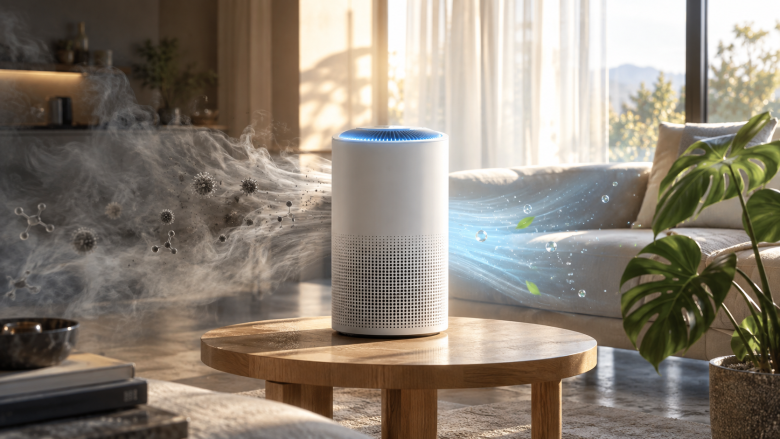
This is where you likely have the most sources of pollutants: upholstery, electronics, pets, cleaning products. A larger unit with a CADR of 200-300 is recommended for rooms up to 400 sq ft. If you have a fireplace, the purifier can help with smoke particles, but you'll need to replace the carbon filter more often.
Common Mistakes I've Made (and Seen Others Make)
Most people don't realize that placement matters. I once put a purifier in a corner behind a curtain. It pulled air from behind the curtain, not from the room. Air purifiers need at least 12-18 inches of clearance on all sides. Also, don't put them near a window or door where outside air is constantly coming in. You'll just be filtering the whole neighborhood.
Another mistake: running the purifier on max all the time. It's noisy and wastes energy. Use the auto mode if available, which uses a sensor to adjust fan speed. But be aware that cheap sensors can be inaccurate. I've tested units that read "clean" when the air was clearly smoky. Trust your nose more than the display.
Filter replacement timing is tricky. The manufacturer's recommendation is often too conservative. If you live in a polluted area, with pets, or near wildfires, you may need to replace carbon filters every 3 months instead of 6. HEPA filters can last 12-18 months if you vacuum the pre-filter regularly. I've extended the life of my HEPA filter by 6 months by cleaning the pre-filter every month.
A Step-by-Step Process to Decide If You Need an Air Purifier
Here's a simple framework I use with clients. Answer these questions:
- What is your primary concern? Allergies, smoke, VOCs, odor, or general health?
- What is the room size? Measure length x width in feet. That's your square footage. Multiply by 2 to get the recommended CADR (clean air delivery rate) for particles. For example, a 200 sq ft room needs a CADR of at least 200 for dust.
- Do you have gas appliances or new furniture? If yes, you need a strong carbon filter. Look for units with at least 2-3 pounds of carbon.
- What is your budget for filters? Calculate annual filter cost. Divide by 12 to see monthly cost. If it's more than $15, consider a different model.
- How much noise can you tolerate? Check decibel ratings. Under 40 dB is whisper quiet.
- Do you have pets? Get a unit with a washable pre-filter to capture hair. Otherwise, the main filter will clog quickly.
Once you have the answers, you can narrow down to 2-3 models. I recommend reading independent reviews from sites like Consumer Reports or Achoo Allergy for real-world testing.
The Bottom Line: Is an Air Purifier Worth It?
Yes, if you choose the right one for your specific needs. No, if you buy a generic unit that only filters dust. The biggest benefits come from tackling VOCs, smoke, and odors-things that the cheap units ignore. I've seen families with asthma see a real reduction in symptoms after adding a good carbon filter. I've seen pet owners finally enjoy a fresh-smelling home. And I've seen my own anxiety drop during wildfire season.
But be honest with yourself. If your home is well-ventilated and you don't have specific pollutant sources, you might not need one. Start with a small unit in the bedroom. See if you notice a difference. In my experience, most people do. And once you experience air that actually feels clean, you'll wonder why you waited so long.