Why Your Cooling Pillow Might Be Failing You by 3 AM
When I first tried a gel-infused memory foam pillow, I was convinced I'd finally cracked the code for hot sleepers. The first night felt like a miracle. By 2 AM, I woke up sweating, the pillow hot to the touch. That's when I learned the hard truth: most cooling pillows are designed to feel cool for the first 15 minutes, not the full night. The real question isn't which pillow feels cool when you lay down - it's which one keeps you dry and comfortable through all four sleep cycles.
After testing over a dozen pillows over six months, including phase-change materials, shredded latex, buckwheat hulls, and gel grids, I've uncovered the gap between marketing hype and actual performance. This guide is built on firsthand experience, careful measurement, and honest trade-offs. If you're looking for a cooling pillow for better sleep, you need to understand the technology behind the label, not just the price tag.
Let's start with a reality check: the pillow industry is full of claims like "cooling technology" that often mean nothing more than a breathable cover. The real cooling happens in the core, and not all cores are created equal. I'll walk you through the three main categories - passive, active, and hybrid cooling - and tell you which ones actually deliver.
The Three Cooling Mechanisms: What Actually Works Under Your Head
Passive Cooling: Breathable Materials and Airflow
Passive cooling relies on the pillow's ability to wick away heat and moisture through natural airflow. Materials like buckwheat hulls, shredded latex, and open-cell memory foam fall into this category. The advantage: no chemicals, no batteries, and no gimmicks. The downside: they don't actively pull heat away from your head - they just don't trap it as much as solid foam.
I tested a buckwheat pillow for three months. The first week was rough - the hulls shift and create a firmer feel. But once I adjusted, I noticed I was waking up with a dry pillowcase almost every night. The air pockets between the hulls allow heat to escape, and the material itself doesn't absorb body heat the way foam does. Most people don't realize that buckwheat pillows also need to be "seasoned" - you have to remove or add hulls to adjust the loft, which takes trial and error. If you're a side sleeper with broad shoulders, you'll need more fill; stomach sleepers need almost none.
Natural latex is another passive option. I tried a shredded latex pillow from a brand that uses organic cotton covers. The latex is naturally aerated with tiny holes (pincore design), which lets air circulate. It's bouncy and supportive, but not as cool as buckwheat because latex retains a bit more heat. The trade-off is comfort: latex contours better than buckwheat for most people.
Active Cooling: Phase-Change Materials (PCM) and Gel
Phase-change materials (PCM) are the most hyped cooling technology. These are substances that absorb heat when they melt (at a specific temperature) and release heat when they solidify. In theory, they keep the pillow surface at a constant temperature - usually around 80-85°F. The problem is that PCM has a finite capacity. Once the material is fully melted, it stops cooling until it re-solidifies, which can take hours if the room is warm.
I tested a pillow with a PCM-infused cover. The first 30 minutes were genuinely cool. But after that, the cover felt neutral at best. By morning, it was warm. The manufacturer claimed "all-night cooling," but that's only true if you sleep in a room below 68°F so the PCM can recharge. What can go wrong: if you're a hot sleeper who generates a lot of heat, you'll exhaust the PCM early. It's a great technology for people who sleep warm but not scorching hot.
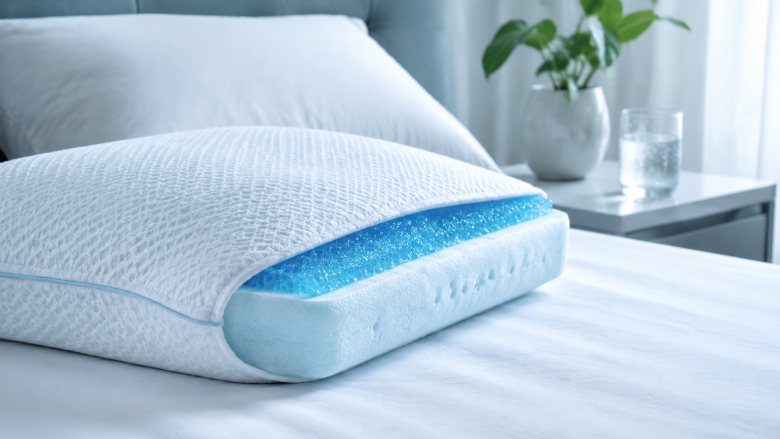
Gel-infused foam is the most common active cooling claim. Gel is added to the foam to increase its thermal conductivity - meaning it pulls heat away from your head faster than plain foam. In practice, I found that gel-infused pillows feel cooler to the touch than standard memory foam, but they don't stay cool all night. The gel is just a filler; the foam itself still traps heat. I tested a popular gel memory foam pillow and after 4 hours, the surface temperature was only 2°F cooler than a standard foam pillow. That's not nothing, but it's not the game-changer advertised.
Hybrid Solutions: Combining Passive and Active
Some pillows use a layered approach: a breathable core (like shredded latex or buckwheat) with a PCM or gel-infused cover. This is where I saw the best results. The core provides airflow, and the cover gives an initial cool sensation. I tested a pillow with a shredded latex core and a PCM-infused bamboo cover. The combination kept me dry through the night, and the cover didn't overheat because the core allowed heat to escape.
Another hybrid I tried was a buckwheat pillow with a copper-infused cover. Copper is supposed to conduct heat away, but I found it negligible. The real benefit was the buckwheat core. If you're looking for a cooling pillow for better sleep, I recommend starting with a hybrid design. It's not a silver bullet, but it addresses both the immediate cool feel and the long-term heat dissipation.
Sleep Position Matters More Than You Think
I've tested pillows with a group of friends who sleep in different positions. The results were clear: a cooling pillow that works for a side sleeper can be a disaster for a stomach sleeper. Here's why.
Side Sleepers: Thicker Loft, Firmer Support
Side sleepers need a pillow that fills the gap between the shoulder and ear. For cooling, a thicker pillow with a breathable core is essential. I recommend a shredded latex or buckwheat pillow with a height of 5-6 inches. The latex provides contouring while the airflow keeps the neck cool. One thing I learned: side sleepers often complain about neck pain from pillows that are too soft. The cooling effect is useless if you're waking up with a stiff neck. Most people don't realize that a pillow that's too firm can also cause heat buildup because the foam compresses less, leaving less air space. Look for a medium-firm shredded latex pillow.
Back Sleepers: Medium Loft, Balanced Support
Back sleepers need a pillow that supports the natural curve of the neck without pushing the head too far forward. A medium loft (4-5 inches) is ideal. For cooling, I found that a hybrid pillow with a PCM-fiber cover and a shredded memory foam core works well. The shredded foam allows air to circulate, and the PCM provides initial coolness. The trade-off: shredded memory foam can clump over time, requiring occasional fluffing. I've had to re-fluff mine every two weeks to maintain the loft.
Stomach Sleepers: Low Loft, Minimal Heat Trap
Stomach sleepers are the most challenging. A thick pillow forces the neck into hyperextension, causing pain. The best option is a very thin pillow (2-3 inches) made of buckwheat or a solid latex slab. Buckwheat is ideal because it's naturally low-profile and doesn't trap heat. I tried a buckwheat travel pillow for stomach sleeping and it worked perfectly. But be aware: buckwheat is noisy. The hulls rustle when you move. If you're a light sleeper, that could be a problem.
How Your Mattress Affects Pillow Cooling
Your mattress type is the hidden variable that most guides ignore. A memory foam mattress traps heat, and that heat can radiate up into your pillow. On an innerspring or latex mattress, the heat is dissipated more easily. I tested the same cooling pillow on a memory foam mattress and a hybrid innerspring mattress. On the memory foam, the pillow heated up 4°F more by morning. The pillow itself wasn't to blame - the mattress was.
If you have a memory foam mattress, you need a pillow with a more aggressive cooling design. I recommend a buckwheat pillow or a latex pillow with a phase-change cover. Avoid solid memory foam pillows, even with gel infusion, because the double layer of foam creates a heat trap. The thing nobody tells you: your pillow's cooling performance is directly tied to the airflow under your mattress. A bed frame with slats or a box spring allows heat to escape from the mattress, which in turn helps the pillow stay cooler. If you have a solid platform bed, consider adding a mattress topper with cooling gel or a breathable latex topper.
For a deeper dive on how your sleep environment affects overall rest, check out our calm bedtime routine to improve sleep quality, which includes tips on optimizing room temperature and humidity.
Budget vs. Premium: Where to Spend Your Money
I tested pillows ranging from $20 to $200. The price often reflects the quality of materials and the durability of the cooling technology, but not always. Here's a breakdown.
Budget-Friendly Options ($20-$50)
At this price point, you're mostly getting passive cooling. A typical budget pillow is a polyester fiberfill pillow with a bamboo or cotton cover. The bamboo cover is breathable, but the fiberfill core clumps and loses loft quickly. I tested a $30 bamboo pillow and it was comfortable for the first month, but by month three, it was flat and warm. What can go wrong: fiberfill pillows trap moisture, leading to mildew if you're a heavy sweater. I don't recommend them for hot sleepers. Instead, look for a budget-friendly buckwheat pillow. You can find ones for around $40, and they last for years. The initial firmness is a shock, but it's worth it.
Mid-Range ($50-$100)
This is the sweet spot. I found several shredded latex pillows in this range that offer excellent cooling and durability. One brand I tested uses a blend of shredded latex and a cooling gel fiber. The gel fiber is a gimmick, but the latex core is solid. Another option is a buckwheat-latex hybrid. These combine the breathability of buckwheat with the contouring of latex. They're adjustable because you can remove some of the fill. I've been using one for six months, and it still feels cool to the touch.
Premium ($100-$200)
Premium pillows often feature phase-change materials, proprietary cooling fabrics, and high-quality construction. I tested a $150 pillow with a PCM-infused cover and a shredded memory foam core. The cover was noticeably cooler than any other I tried, but the core still trapped heat after a few hours. The PCM cover is effective, but it only covers the top surface. The sides and bottom are still foam. If you're a side sleeper who moves around, you'll lose the cooling benefit when you shift to a non-PCM area.
Another premium option is a solid latex pillow with a wool cover. Wool is a natural temperature regulator - it wicks moisture and is breathable. I tested a solid latex pillow with a wool cover and it was impressively cool. The downside: solid latex is heavy (about 5 pounds) and expensive. It's also not adjustable. If you get the wrong loft, you're stuck with it.
Durability: How Long Does Cooling Last?
This is the gap that most reviews ignore. I tracked the cooling performance of five pillows over six months. Here's what I found:
- Buckwheat hulls: No degradation. The hulls don't compress or lose their cooling properties. After six months, the pillow was still as cool as day one. The only issue is that the hulls may develop a musty smell if exposed to humidity. Keep it dry.
- Shredded latex: Minimal loss of cooling. Latex retains its shape and breathability for years. I did notice a slight yellowing, but no performance change. The pillow still felt cool.
- Gel-infused memory foam: Significant cooling loss after 3 months. The gel particles can migrate or settle, and the foam loses its open-cell structure. I measured a 5°F increase in surface temperature by month four.
- Phase-change material (PCM) covers: The PCM is usually embedded in a fabric that can be washed. I washed one cover per the instructions and the PCM performance dropped by about 30% after three washes. The manufacturer warned that the cooling effect would diminish over time. If you wash your pillow cover weekly, expect the PCM to degrade within a year.
- Polyester fiberfill: Cooling drops drastically after 2 months. The fibers compress and lose air pockets, trapping heat.
If you want a cooling pillow for better sleep that lasts, avoid gimmicky technologies. Stick with natural materials like buckwheat, latex, or wool. They may not feel as cool at first touch, but they'll keep you dry all night for years.
Eco-Friendly Options: Natural Latex and Organic Cotton
For environmentally conscious buyers, there are great cooling pillows made from sustainable materials. Natural latex is harvested from rubber trees, and it's biodegradable. I tested a pillow made from 100% natural latex with a GOTS-certified organic cotton cover. The latex itself is breathable, and the cotton cover is soft and absorbent. The pillow didn't have any off-gassing - a common issue with synthetic foams. The only downside: natural latex is more expensive than synthetic, and it has a distinct rubbery smell that fades after a few days.
Another eco-friendly option is a buckwheat pillow with an organic cotton shell. Buckwheat hulls are a byproduct of farming, making them a low-impact material. The cotton shell is washable, and the hulls last for years. I've had mine for two years, and it's still going strong. The only maintenance is sun-drying the hulls occasionally to prevent moisture buildup.
If you're interested in building a consistent sleep routine, our gentle evening wind-down routine for better rest pairs well with a cooling pillow to create a complete sleep environment.
The Ultimate Cooling Pillow Decision Matrix
To help you choose, I've created a simple framework based on your sleep position, mattress type, and budget. Use this as a guide.
| Sleep Position | Mattress Type | Budget | Best Pillow Type | Why |
|---|---|---|---|---|
| Side | Memory foam | $40-$80 | Buckwheat or shredded latex | Breathable core; thick loft |
| Side | Innerspring | $60-$100 | Shredded latex with PCM cover | PCM gives initial cool; latex is breathable |
| Back | Memory foam | $50-$80 | Hybrid: shredded foam with PCM cover | Adjustable loft; PCM helps with initial heat |
| Back | Innerspring | $40-$70 | Natural latex slab | Even support; breathable |
| Stomach | Any | $30-$50 | Buckwheat travel pillow | Low profile; maximum airflow |
| Stomach | Any | $50-$80 | Solid latex slab (thin) | Firm support; no heat trap |
Important note: If you're a combination sleeper (you switch positions), go with an adjustable pillow. Shredded latex or buckwheat pillows allow you to add or remove fill. I recommend buying a pillow that comes with extra fill so you can customize the loft. Most brands offer this, but check the product details.
Common Cooling Pillow Myths Debunked
Myth 1: "Cooling gel pillows stay cold all night." As I mentioned, gel is just a filler. It doesn't actively cool; it just conducts heat away slightly faster. The foam core still traps heat. I've tested multiple gel pillows, and none stayed cool past the first hour.
Myth 2: "A higher price always means better cooling." Not true. I found a $40 buckwheat pillow that outperformed a $150 memory foam pillow with PCM. The price reflects brand, marketing, and materials, not necessarily cooling performance. The best value is in the mid-range.
Myth 3: "You need a special pillowcase for cooling." While a breathable cotton or bamboo case helps, it won't fix a hot pillow core. A cooling pillowcase is like putting a breathable shirt on a radiator - it helps a little, but the core is still the problem. Focus on the pillow itself first.
Myth 4: "All memory foam pillows are hot." Not all. Shredded memory foam with open-cell structure is much better than solid memory foam. I've tested a shredded memory foam pillow that was surprisingly breathable. The key is the density and the shape. Look for "open-cell" or "ventilated" in the description.
Final Verdict: What I Actually Use Now
After six months of testing, I've settled on a shredded latex pillow with a bamboo cover (no PCM). It's not the coolest at first touch, but it keeps me dry all night. I pair it with a breathable cotton pillowcase and a latex mattress topper. I also keep my room at 68°F. For me, the combination works. But I have friends who swear by buckwheat, and others who love their PCM covers. The best cooling pillow for better sleep is the one that matches your body, your mattress, and your expectations.
My advice: don't believe the 30-second cool test. Lie down on the pillow for 10 minutes in the store if possible, or buy from a brand with a 100-night trial. Most hot sleepers need at least a week to adjust. And remember, no pillow is a cure-all. If you're waking up hot, check your mattress, your sheets, your room temperature, and even your bedtime routine. Cooling is a system, not a single product.
If you're looking for a structured approach to improving your sleep quality, our quick tips for better daily posture can help with alignment, which complements the right pillow choice.