What Is the Real Difference Between a Power Nap and a Long Nap?
If you only have 15 minutes before your next meeting, a power nap is your best bet. If you have 90 minutes to spare and you are recovering from a poor night of sleep, a long nap can give you a full sleep cycle. But the real answer is not just about length. It is about what you need right now: quick alertness or deep recovery. Most people grab whichever nap they can, then wonder why they feel groggy or still tired. I have made that mistake more times than I can count, and I want to help you avoid it.
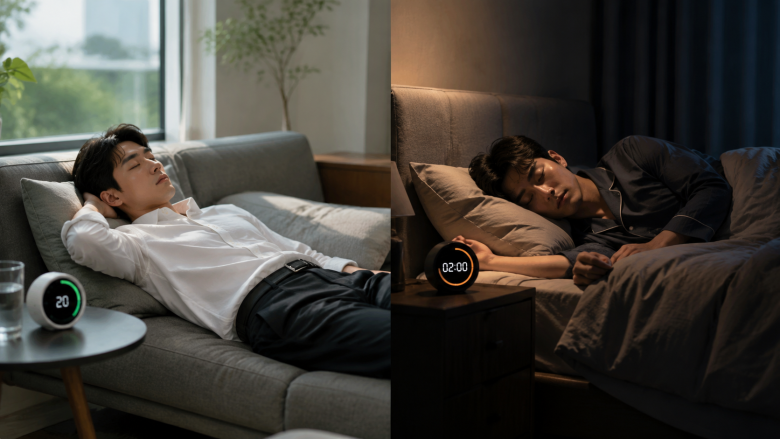
The core difference is simple: a power nap (10-20 minutes) keeps you in light sleep, so you wake up refreshed without sleep inertia. A long nap (90 minutes) lets you complete a full cycle, including deep sleep and REM, which boosts memory and creativity but can leave you disoriented if you wake up during deep sleep. The trick is knowing when to use each one. This article gives you a decision tree, real-world scenarios, and the honest trade-offs that most articles skip.
What Actually Happens in a Power Nap vs a Long Nap?
To understand the difference, you need to know what happens to your brain during each nap length. Sleep is divided into stages: N1 (light sleep), N2 (stable sleep), N3 (deep sleep or slow-wave sleep), and REM (rapid eye movement). A full cycle takes about 90 minutes.
The Power Nap Window (10-20 Minutes)
When you nap for 10 to 20 minutes, you stay mostly in N1 and N2. These are light stages where your brain is still somewhat aware of the environment. You can wake up quickly and feel alert almost immediately. This is why power naps are ideal for a quick boost before a presentation, a long drive, or a study session.
Can a 12 minute nap count as a power nap? Yes, absolutely. Research from NASA on pilots shows that naps as short as 10 minutes improve alertness and performance. A 12-minute nap falls right in that sweet spot. It is better than no nap, though the full benefits of a power nap usually peak around 20 minutes. If you only have 12 minutes, take it. Set a timer and do not overshoot.
What Happens During a Long Nap (90 Minutes)
A 90-minute nap allows you to complete one full sleep cycle. You enter deep sleep (N3) around the 30- to 45-minute mark, then move into REM toward the end. This type of nap helps with memory consolidation, emotional regulation, and creative problem solving. It is also the only way to partially compensate for a night of lost sleep.
But there is a catch: if you wake up during deep sleep (which happens if you nap for 30 to 60 minutes without completing the cycle), you will experience sleep inertia - that awful groggy, disoriented feeling that can last 30 minutes or more. A 90-minute nap avoids this because you wake up from REM or light sleep at the end of the cycle.
The Thing Nobody Tells You About Long Naps
I learned this the hard way. During a hectic workweek, I decided to nap for 45 minutes after lunch. I thought I was being smart. Instead, I woke up with a pounding headache, confusion, and a strong desire to go back to sleep. It took me an hour to feel normal again. That was sleep inertia, and it is the hidden cost of a long nap that is not timed correctly.
Most people don't realize that a 45-minute nap can be worse than no nap at all. The sleep inertia from waking up in deep sleep can impair your cognitive function more than being tired. The only way to avoid it is to either keep your nap under 20 minutes (power nap) or extend it to a full 90 minutes. There is no safe middle ground unless you are willing to deal with the grogginess.
Another thing nobody tells you: long naps can disrupt your nighttime sleep, especially if you take them after 3 PM. Your body has a natural circadian dip in the early afternoon (around 1-3 PM), which is the ideal time for any nap. A long nap later in the day can steal some of your sleep drive, making it harder to fall asleep at night. This is a trade-off you need to consider.
When to Choose a Power Nap (and When to Avoid It)
Power naps are best for situations where you need immediate, short-term alertness. Here are the scenarios where I reach for a power nap:
- Before a high-stakes meeting or presentation: A 15-minute nap clears mental fog and sharpens focus. I usually pair it with a cup of coffee right before napping (the "caffeine nap" technique) because caffeine takes about 20 minutes to kick in, so I wake up with both sleep and caffeine working together.
- When driving long distances: If you feel drowsy behind the wheel, pull over and nap for 15 minutes. It is safer than pushing through. The National Highway Traffic Safety Administration recommends this as a countermeasure for drowsy driving.
- During a study session or creative block: Short naps help reset your attention span without the risk of deep sleep disruption.
But there are times when a power nap is not enough. If you are severely sleep-deprived (for example, after pulling an all-nighter), a 20-minute nap will provide only a temporary Band-Aid. You will still feel exhausted within an hour. In that case, a long nap is better, but it needs to be timed carefully.
Also, avoid power naps if you are already in a deep sleep debt. They can make you feel more tired because your body is craving restorative deep sleep, and a light nap does not deliver it. Listen to your body: if you wake up from a 15-minute nap feeling worse, you might need a full cycle or a full night's sleep.
When a Long Nap Makes Sense
Long naps (90 minutes) are not for daily use. They are a tool for specific situations:
- After a night of poor sleep: If you got only 4-5 hours, a 90-minute nap can help you recover some of the lost deep sleep and REM. This is especially useful for shift workers or new parents.
- Before a night shift: A long nap taken in the afternoon can prepare you for staying awake all night. Studies show that a 90-minute nap before a night shift improves performance and safety.
- For creative problem-solving: REM sleep is known to help with associative thinking and insight. If you are stuck on a problem, taking a 90-minute nap that includes REM can help you see new connections.
But long naps come with a strict rule: take them early in the afternoon (before 3 PM) and have a buffer of at least 30 minutes after waking up to account for possible sleep inertia. Even if you wake up at the 90-minute mark, you might feel a bit groggy for a few minutes - that is normal and fades quickly.
Power Nap vs Long Nap: A Decision Tree for Your Day
Here is a simple decision tree to help you choose in under 10 seconds. I have used this with clients and in my own life, and it works.
Step 1: How much time do you have?
- Less than 20 minutes? → Take a power nap (10-20 minutes).
- Exactly 90 minutes? → Take a long nap, but only if it is before 3 PM.
- Between 30 and 60 minutes? → Avoid napping unless you are willing to fight sleep inertia. If you must, try to keep it to 20 minutes or extend to 90.
Step 2: What is your goal?
- Need immediate alertness? → Power nap.
- Need to recover from sleep loss? → Long nap (90 minutes).
- Need to boost creativity? → Long nap (90 minutes), ideally with REM.
Step 3: What time of day is it?
- Before 3 PM? → Either nap type works, but long nap is safer.
- After 3 PM? → Only power nap, and even then keep it under 15 minutes. Otherwise, you risk disrupting your night sleep.
Step 4: Are you prone to sleep inertia?
- Yes? → Stick to power naps only. Long naps will leave you groggy for an hour.
- No? → Experiment with long naps, but always set an alarm for 90 minutes exactly.
This decision tree is not perfect - individual biology varies. But it gives you a starting point. The key is to experiment and pay attention to how you feel after each nap.
Can a 12-Minute Nap Count as a Power Nap?
Yes, it can. As I mentioned earlier, a 12-minute nap is well within the power nap range. In fact, research by Brooks and Lack (2006) found that even a 10-minute nap improved alertness and cognitive performance, with effects lasting up to 2-3 hours. A 12-minute nap is just a slightly longer version of that.
The only catch is that some people need a bit more time to fall asleep. If it takes you 5 minutes to drift off, a 12-minute nap might only give you 7 minutes of actual sleep. That is still beneficial, but not as much as a 15- or 20-minute nap where you get 10-15 minutes of sleep. To maximize a 12-minute nap, practice falling asleep quickly - use a sleep mask, white noise, and a cool room. I have found that consistency helps: if you nap at the same time every day, your body learns to fall asleep faster.
So, if you have only 12 minutes, take it. Do not let the perfect be the enemy of the good. Just set a timer and do not snooze.
Common Mistakes When Napping (and How to Avoid Them)
Over the years, I have made every mistake in the book. Here are the most common ones and how to fix them:
- Napping too late in the day: Taking a nap after 4 PM can interfere with your melatonin production and make it hard to fall asleep at night. Solution: nap before 3 PM, or if you must nap later, keep it under 10 minutes.
- Napping in a bright or noisy environment: Light tells your brain to stay awake. Even a short nap is more effective in complete darkness. Use a sleep mask and earplugs.
- Not setting an alarm: This is the biggest mistake. Without an alarm, you risk falling into deep sleep and waking up groggy. Always set a timer for your desired nap length.
- Napping after a heavy meal: A large lunch can make you drowsy, but napping immediately after eating can cause acid reflux and disrupt sleep. Wait at least 30 minutes after eating before napping.
- Relying on naps to fix chronic sleep deprivation: Naps are a supplement, not a substitute for regular sleep. If you consistently need long naps, you might have a sleep debt that needs to be addressed with a better nighttime routine. As we discussed in our Balanced Breakfast Routine to Power Your Day , morning habits including meal timing can affect your energy levels throughout the day, and that includes your need for naps.
How to Build a Nap Routine That Works for You
You do not need to overthink this. Here is a step-by-step process that I have used for years:
- Identify your goal. Are you trying to feel more alert right now, or are you trying to recover from a bad night? The answer determines your nap length.
- Choose the length based on the decision tree above. If you have time for a 90-minute nap and it is before 3 PM, go for it. Otherwise, stick to 10-20 minutes.
- Optimize your environment. Darken the room, use a fan or white noise, and lie down if possible. Sitting upright in a chair can work for power naps, but lying down is better.
- Set a timer. Do not rely on your internal clock. Use your phone or a dedicated nap timer.
- Upon waking, move immediately. Get up, stretch, and expose yourself to bright light. This helps signal to your brain that nap time is over.
- Experiment and adjust. Keep a simple log for a week: note the nap length, time of day, how you felt before and after, and whether you had trouble sleeping that night. Adjust based on patterns.
If you find that even a 20-minute power nap leaves you groggy, you might be someone who is sensitive to light sleep interruption. In that case, try a shorter nap of 10 minutes or even a "micro-nap" of 5-6 minutes. Some research shows that even 6 minutes can improve memory, though the effect is smaller.
The Bottom Line: Power Nap vs Long Nap for Your Specific Needs
There is no universal winner. The best nap is the one that matches your current situation. Use the decision tree to decide in seconds. Remember: power naps are for quick boosts, long naps are for deep recovery. Avoid the middle ground unless you are prepared for sleep inertia. And if you only have 12 minutes, take it - it counts.
Napping is a skill that takes practice. Start with short power naps and see how your body responds. Once you master that, you can experiment with 90-minute naps on weekends or after poor sleep. The goal is not to nap more, but to nap smarter. And if you combine good napping habits with a solid morning routine, you will have more consistent energy throughout the day.