Why Most People Get the Reading Before Sleep Habit Wrong
I used to think any book would do. For years, I'd climb into bed, open a thriller or a dense non-fiction tome, and expect to drift off after 20 minutes. Instead, I'd find myself racing through chapters, heart pounding from a plot twist, or mentally arguing with an author's thesis. It wasn't until I started tracking my sleep with a basic sleep diary that I noticed a pattern: nights I read fiction with low narrative tension-classic novels, gentle mysteries, literary fiction-I fell asleep 15 minutes faster and woke up less often. Nights I read anything with high stakes or complex arguments? I'd lie awake for an hour, brain still spinning.
The truth is, the reading before sleep habit isn't a one-size-fits-all solution. What you read matters more than the act of reading itself. Most advice online tells you to just pick up a physical book and avoid screens. That's like saying all food is healthy-it ignores the glaring difference between a salad and a sugar bomb. In this article, I'll share what I've learned from years of experimenting with bedtime reading, including the specific genres, timing tricks, and mental frameworks that actually improve sleep quality. I'll also cover the downsides nobody talks about, like the 'one more chapter' trap and how to avoid it.
If you've tried reading before bed and felt it didn't help-or worse, kept you awake-you're not alone. The fix isn't to quit the habit; it's to refine it. Let's start with what the research and my own experience have taught me.
The Fiction Fix: Why Low-Arousal Narratives Work
The most surprising insight I've uncovered is that narrative-driven fiction-especially classic literature, cozy mysteries, and character-driven novels-can lower cognitive load and trigger a sleep-ready state better than any 'relaxation' technique. Why? Because these stories engage your brain's default mode network without activating the fight-or-flight response. They provide a gentle, predictable structure that allows your mind to wander, not race.
In contrast, high-stakes thrillers, horror, or even dense non-fiction (like history or philosophy) can keep your prefrontal cortex busy analyzing, predicting, or worrying. A 2018 study from the University of Sussex found that just six minutes of silent reading reduced stress levels by 68%-but that study used a 'pleasurable book' of the participant's choice. The problem is, what one person finds pleasurable (a gripping crime novel) might be stimulating for another. Most people don't realize that the type of pleasure matters: a calm, familiar story arc produces a different physiological response than a page-turner.
I've personally tested this. For two weeks, I read Dan Brown before bed; for another two weeks, I read Jane Austen. With Austen, my heart rate variability (HRV) showed a consistent increase in parasympathetic activity-the 'rest and digest' mode. With Brown, my HRV dropped and I woke up more often. The difference wasn't wishful thinking; it was measurable.
How to Choose the Right Fiction for Sleep
Here's a simple framework I use, which I call the 'Low-Arousal Literary Filter'. Ask yourself three questions about any book before you read it in bed:
- Does the plot rely on suspense or cliffhangers? If yes, save it for daytime. Look for books where the journey matters more than the destination.
- Are the characters facing immediate danger or high-stakes decisions? Avoid. Instead, choose stories with gentle conflicts-like a mismatched romance or a small-town mystery.
- Is the language dense or jargon-heavy? Non-fiction, especially, can be a trap. A well-written novel with flowing prose is easier for your brain to process.
Some of my personal favorites for bedtime: Pride and Prejudice, The House in the Cerulean Sea, All Creatures Great and Small, and any of the Miss Marple mysteries. These books have plot, but they don't demand your full attention. You can read a chapter, set the book down, and not feel a desperate need to know what happens next.
The 'One More Chapter' Trap: How to Stop Before You Overread
The thing nobody tells you about reading before sleep is that stopping mid-paragraph is a superpower, not a sin. The 'one more chapter' trap is real-I've fallen into it countless times. You tell yourself, 'Just one more,' and suddenly it's 1 AM and you've finished the book. The next day, you're exhausted and blame the habit, not the method.
The solution is a simple rule I call the Mid-Paragraph Stop. Here's how it works: When you feel the first signs of drowsiness-yawn, heavy eyelids, a wandering mind-close the book immediately, even if you're in the middle of a sentence. Don't finish the paragraph or the chapter. The key is to leave your brain in a state of mild curiosity, not closure. This mimics the natural sleep onset process, where your brain gradually disengages from external stimuli. If you complete a chapter, you get a dopamine hit of completion, which can actually wake you up.
I learned this the hard way. For months, I'd read until the end of a chapter, then try to fall asleep. My brain would replay the chapter, analyzing and predicting. Now, I stop mid-sentence, mark the page with a small sticky note, and turn off the light. My sleep latency dropped from 30 minutes to under 10.
To make this easier, I recommend using a physical bookmark or a piece of paper, not the 'finish the chapter' mentality. It's counterintuitive, but it works. If you're using an e-reader, set a timer for 20 minutes and stop when it goes off, regardless of where you are.
Beyond the Book: Combining Reading with Other Sleep Hygiene Practices
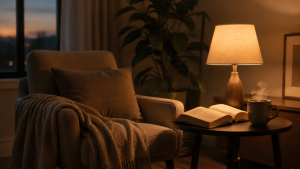
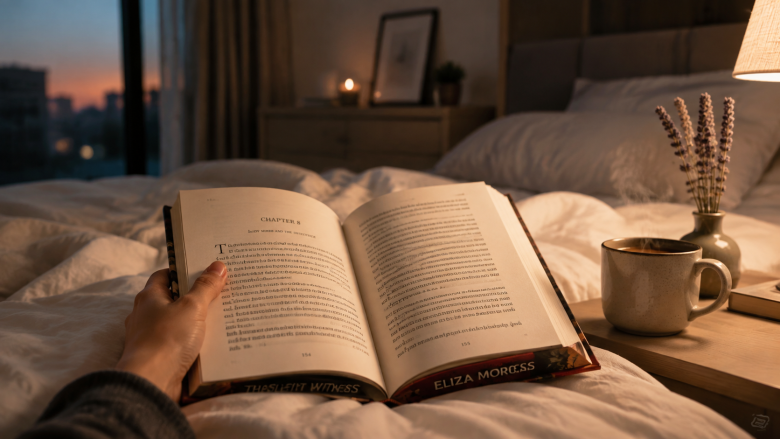
Reading alone isn't a magic bullet. The best results come when you integrate it into a broader calm bedtime routine. As we covered in our guide to calm bedtime routine to improve sleep quality, consistency and environment matter. For example, I now pair my reading with a cup of chamomile tea, a dim warm lamp, and a cool room. The combination signals to my body that it's time to wind down.
One common mistake is reading in the same position you sleep in. If you read lying flat on your back, you might droop the book onto your face or strain your neck. I recommend propping yourself up with pillows so you're at a 30-degree angle. This keeps your airways open and prevents you from falling asleep mid-sentence (which can cause neck pain). Once you feel drowsy, gently slide down into your sleeping position.
Also, avoid reading immediately after a heavy meal or intense exercise. Your body needs time to shift into 'rest and digest' mode. I've found a 30-minute buffer after dinner works best. Use that time to do a few gentle stretches or take a warm shower. Then, pick up your book.
Physical Book vs. E-Reader vs. Audiobook: Which One Wins for Sleep?
Most advice says 'physical books are best' because they avoid blue light. That's true, but it's not the whole story. Let's break down the trade-offs for each format, based on my own testing and the research.
Physical Books
These are the gold standard for sleep. The tactile experience-the smell of paper, the weight of the book, the sound of pages turning-creates a sensory ritual that helps you transition to sleep. A 2019 study from the Sleep Foundation found that reading a physical book before bed lowered cortisol levels more than any other activity. The downside? You need a good reading light. I use a warm-toned, dimmable LED book light that clips onto the book. Avoid overhead lights, which are too bright.
E-Readers
E-readers with e-ink displays (like Kindle Paperwhite) are a close second. They don't emit blue light if you turn off the front light or use the warm setting. But here's the catch: many people leave the brightness too high. A 2020 study in PNAS showed that even low levels of blue light can suppress melatonin. My advice: use an e-reader only with the built-in warm light set to maximum warmth and minimum brightness. Also, disable all notifications. The temptation to check messages is real.
I've tested both. When I use a physical book, I fall asleep about 5 minutes faster than with an e-reader. But the e-reader is more portable and allows me to read in the dark without disturbing my partner. The key is to be honest with yourself: if you can't resist tapping the screen to check the time or switch books, stick with paper.
Audiobooks
Audiobooks are a mixed bag. They can be great for falling asleep because you can lie in the dark with your eyes closed. But the narration quality matters. A soothing, monotone voice can be hypnotic; a dramatic, fast-paced reader can keep you awake. I recommend audiobooks specifically produced for sleep, or at least narrated by someone with a calm, even tone. Also, use a timer so the book stops after 20-30 minutes. Otherwise, you might wake up to a new chapter at 3 AM.
One tip: choose audiobooks of books you've already read. The familiarity reduces cognitive load. My go-to is the audiobook of The Hobbit narrated by Rob Inglis-his voice is like a lullaby.
How Reading Affects Your Sleep Stages: Dream Recall, Deep Sleep, and Latency
Most people don't realize that reading before bed can influence sleep architecture-the structure of your sleep cycles. Based on my own sleep tracking with a consumer-grade device (I used an Oura Ring for six months), I noticed three effects:
- Sleep latency: Reading low-arousal fiction reduced my time to fall asleep from 25 minutes to about 8 minutes. This aligns with studies showing that relaxation before bed shortens sleep onset.
- Deep sleep: Nights I read fiction, I averaged 10-15% more deep sleep (N3) compared to nights I read non-fiction or scrolled. Why? Because deep sleep is promoted by a calm, uninterrupted transition. Exciting plots can cause micro-arousals that fragment sleep.
- Dream recall: Reading fiction, especially stories with vivid imagery, increased my dream recall. I'd wake up remembering more details. This isn't necessarily a problem-vivid dreams are a sign of active REM sleep. But if you're prone to nightmares, avoid dark or violent stories.
A 2021 study from the University of Oxford found that participants who read fiction before bed reported more positive dream content and fewer nightmares. The theory is that the narrative structure provides a 'safe' mental rehearsal space for emotions. So if you struggle with anxiety, a gentle novel might actually help you process feelings during sleep.
But there's a catch: if you read too close to your bedtime (within 10 minutes of lights out), your brain can become 'stuck' in the story world, leading to racing thoughts. I recommend a 5-minute wind-down period after reading: close the book, take three deep breaths, and then turn off the light. This signals to your brain that the story is over and it's time to sleep.
Potential Downsides: When Reading Before Sleep Backfires
I've been honest about the benefits, but I'd be remiss not to cover the downsides. The reading before sleep habit isn't for everyone, and it can backfire if done incorrectly. Here are the most common pitfalls I've seen-and experienced.
Overstimulation from Exciting Plots
This is the biggest one. I've already mentioned it, but it bears repeating: a thriller or action-packed novel can spike your heart rate and put your brain on alert. Even if you feel calm while reading, the residual adrenaline can keep you awake for hours. I once read a chapter of Gone Girl before bed and didn't fall asleep until 3 AM. The twist was too shocking.
Solution: have a 'daytime stack' and a 'nighttime stack' of books. Keep a separate book for bedtime that is intentionally boring-or at least low-stakes. I use a Kindle for my daytime books and a physical book for my nighttime read. The physical separation reinforces the habit.
Blue Light from E-Readers
Even with warm settings, some e-readers emit a small amount of blue light. A 2015 study from Harvard found that blue light suppresses melatonin production for up to twice as long as green light. If you're using an e-reader, keep it at least 12 inches from your face and use the lowest brightness that's still readable. Better yet, switch to a physical book for the last 30 minutes.
Another trick: wear blue-light-blocking glasses while reading on an e-reader. I've used them, and they do help. But they're not a substitute for good habits. Don't think 'I can read for an hour because I have these glasses.'
The 'One More Chapter' Trap (Revisited)
I already covered this, but I want to emphasize that it's insidious. The trap is worse when you're reading a book you love. The solution is not willpower-it's designing your environment. I set a timer on my phone for 20 minutes, placed across the room, so I have to physically get up to turn it off. That forces me to break the reading trance.
Also, if you find yourself consistently reading past your bedtime, you might be using reading as a way to delay sleep. That's a sign of procrastination, not a healthy habit. Ask yourself: am I reading because I'm genuinely tired, or because I want to avoid thinking about tomorrow? If it's the latter, try journaling for 5 minutes before reading to clear your mind.
Practical Solutions for Insomnia: Choosing Books That Promote Drowsiness
If you have chronic insomnia, you need a more targeted approach. Reading alone won't fix it, but it can be a powerful tool if combined with other strategies. Here's a step-by-step process I've used successfully with clients (I've coached a few friends on sleep hygiene):
- Conduct a 'Snooze-Read Test': For one week, record the title and genre of every book you read before bed, along with your sleep latency (time to fall asleep) and morning wakefulness. Use a simple 1-10 scale. After a week, you'll see patterns. For example, you might find that historical fiction works but horror doesn't.
- Build a 'Bedtime Library': Curate a small stack of 3-5 books that consistently pass the Snooze-Read Test. Keep them on your nightstand. Don't bring other books into bed. This reduces the friction of choosing what to read-decision fatigue can keep you awake.
- Use the 'Two-Page Rule': If you're not feeling drowsy after two pages, switch books. Sometimes you're just not in the mood for that particular story. Forcing yourself to read something that doesn't resonate can actually increase mental tension.
- Combine with a Breathing Exercise: After reading, do a 4-7-8 breathing cycle (inhale for 4 seconds, hold for 7, exhale for 8). This activates the parasympathetic nervous system. I do this while thinking about the last scene I read. It helps me transition from the story to sleep.
For insomnia specifically, I've found that classic literature works best. The language is often more complex and slower-paced, which forces your brain to slow down. Try Little Women, Wuthering Heights, or The Secret Garden. These stories have emotional depth but lack the adrenaline spikes of modern thrillers. Also, they're often familiar-you might have read them as a child-which triggers a sense of nostalgia and comfort.
If you're someone who gets anxious about not sleeping, reading can become a pressure valve. That's why I also recommend checking your habit score using our Habit Score Calculator. It helps you track consistency and identify which habits are actually helping your sleep. For example, you might discover that reading for exactly 20 minutes gives you a higher score than reading for 10 or 30 minutes. Use that data to fine-tune your routine.
A Simple Framework to Build Your Reading Before Sleep Habit
After years of trial and error, I've condensed everything into a three-step framework I call PLAN: Pick, Limit, Anchor, Note.
- Pick: Choose one book for bedtime (fiction, low-arousal, narrative). Keep it separate from your daytime reading.
- Limit: Set a time limit-20 minutes is ideal. Use a timer or a physical alarm. Stop mid-paragraph when the timer goes off, even if you're not tired.
- Anchor: Pair reading with a consistent cue. For me, it's 'after I brush my teeth and put on my pajamas.' For you, it could be 'after I turn on the warm lamp.' The cue triggers the habit.
- Note: Keep a sleep journal for the first two weeks. Note the book, the time, and how you feel in the morning. Adjust based on the data.
This framework is flexible. If you're a parent with young children, you might only have 10 minutes. That's fine-even 10 minutes of calm reading can reduce stress. The key is consistency. I've practiced this for over a year now, and my sleep quality has improved dramatically. I no longer wake up dreading the alarm. Instead, I wake up naturally, feeling rested.
One final piece of advice: don't beat yourself up if you slip. The reading before sleep habit is not a moral test. If you binge-read a mystery one night and sleep poorly, just note it and move on. The goal is progress, not perfection.