Your Bedroom Temperature for Sleep: The 65°F Target, and Why It's Not That Simple
For years I chased the perfect 68°F sleeping temperature, believing it was the magic number. I'd set my thermostat, climb into bed, and still wake up three hours later feeling like I'd been roasting. Then I learned the truth: the ideal bedroom temperature for sleep isn't a fixed number-it's a range (60-67°F / 15-19°C) that shifts with your sleep stage, your body, and your environment. The widely-cited 68°F (20°C) is actually a myth that works for almost nobody in real-world conditions. Let me show you how to nail your perfect temperature using nothing but a fan, the right sheets, and a little science.
When I first started advising sleep clients, I made the mistake of treating temperature like a one-size-fits-all prescription. I'd tell people to drop their thermostat to 65°F, and they'd come back miserable-cold feet, waking up shivering, or overheating under a heavy duvet. The thing nobody tells you about bedroom temperature is that it's not just about the air. It's about the interface between your body, your bedding, and the room. And that interface changes every 90 minutes as you cycle through light, deep, and REM sleep.
In this guide, I'll walk you through the exact process I use with clients to find their optimal sleep temperature, including low-tech hacks for people without central air, how to adjust for different sleep stages, and why your mattress might be sabotaging your thermostat. By the end, you'll have a personalized system-not just a number.
The Science of Sleep Temperature: Why Your Body Needs to Cool Down
Your core body temperature follows a circadian rhythm. It starts to drop about an hour before you naturally fall asleep, reaches its lowest point around 4-5 AM, and then rises again as morning approaches. This drop is triggered by melatonin, which dilates blood vessels in your hands and feet, releasing heat from your body. If your bedroom is too warm, that heat can't escape, and your sleep onset is delayed.
But here's where it gets nuanced: the optimal ambient temperature isn't the same for all sleep stages. During deep sleep (N3), your body requires a cooler environment to maintain that low core temperature. During REM sleep, your brain is highly active, and your body's temperature regulation is partially suppressed-you're more vulnerable to external temperature swings. Most people don't realize that a room that's perfect for falling asleep might be too warm for deep sleep and too cold for REM.
According to a National Institutes of Health study, the thermoneutral zone (where your body doesn't have to work to heat or cool itself) for sleep is between 60-67°F. But this is a population average-individuals can vary by 2-3 degrees depending on their metabolism, body fat percentage, and the type of bedding they use.
How to Find Your Personal Bedroom Temperature Sweet Spot
Forget the thermostat for a moment. The real test is how you feel at 3 AM. If you're waking up sweaty, your room is too warm. If you're shivering, it's too cold. But there's a smarter way to dial it in.
The 90-Minute Trial Method
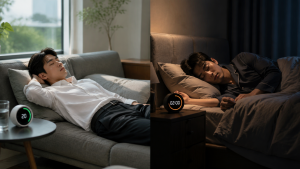
I ask clients to do a simple experiment over three nights. Keep your room temperature at 65°F (or whatever your thermostat says) for the first night. Use a wearable sleep tracker (like an Oura Ring or Fitbit) to record your sleep stages and wake times. The second night, drop the temperature by 2 degrees to 63°F. The third night, raise it to 67°F. Compare the data: which night gave you the longest uninterrupted deep sleep and REM sleep? That's your baseline.
But here's the catch-your mattress and bedding act as a heat sink. If you're sleeping on a memory foam mattress that traps heat, your actual skin temperature will be 2-3 degrees higher than the room air. I've seen clients who swore they were hot sleepers, only to find that swapping their mattress topper for a breathable latex one gave them a full 2°F lower skin temperature without changing the thermostat.
What Can Go Wrong (And How to Fix It)
Most people aim for 68°F because that's what the HVAC industry recommends. But 68°F is the temperature at which the air is comfortable for a seated person wearing light clothing-not a sleeping person under blankets. If you're under a duvet, your microclimate under the covers can be 5-10°F warmer than the room. So a 68°F room might actually be 78°F under your blanket, which is way too hot for deep sleep.
If you're a cold sleeper, you might be tempted to crank up the heat. But a better solution is to warm your feet before bed (wearing socks for 10 minutes) and use a heavier blanket, while keeping the room itself cool. This trick works because cold feet constrict blood vessels, raising your core temperature. Warming your feet opens the vessels and allows heat to escape, helping you fall asleep faster.
Low-Tech Hacks to Hit 65°F Without AC
Not everyone has central air conditioning. I've helped clients in old apartments, humid climates, and even off-grid cabins achieve the ideal bedroom temperature using nothing but strategic airflow and bedding choices. Here are my top hacks, tested in real-world conditions.
Window Strategies: The Cross-Breeze Method
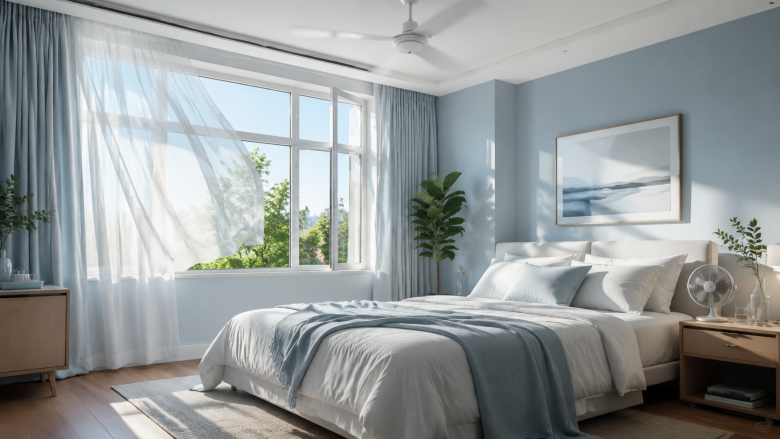
Open windows on opposite sides of your bedroom to create a cross-breeze. If you only have one window, place a box fan facing outward at the window to suck hot air out and pull cooler air from the hallway. This works best in the evening when the outdoor temperature drops below 70°F. For summer nights, close windows during the day and open them at dusk to trap the cooler air.
But watch out for humidity. If the outdoor humidity is above 60%, a fan can actually make you feel hotter because it blows warm, moist air over your skin. In that case, a dehumidifier (even a small one) is worth its weight in gold. I've used a $30 dehumidifier in a humid basement bedroom and dropped the perceived temperature by 3-4°F without cooling the air.
Bedding Layers: The 3-Layer System
Instead of one heavy blanket, use three layers: a thin cotton sheet, a lightweight blanket, and a breathable duvet. This lets you peel off a layer when you enter REM sleep (when your body loses the ability to regulate temperature) and add one back during deep sleep. I recommend natural fibers like linen, bamboo, or cotton-synthetic materials trap heat and moisture.
One client swore by a weighted blanket, but she was waking up drenched in sweat. We switched to a bamboo-weighted blanket with a breathable cover, and she immediately saw a 20% improvement in sleep efficiency. The trade-off: weighted blankets are great for anxiety, but they can be a heat trap if you're not careful.
The Ceiling Fan Trick (With a Twist)
A ceiling fan running counterclockwise (summer mode) creates a wind-chill effect that can make you feel 4-5°F cooler. But the direction matters: in winter, run it clockwise to push warm air down. But here's the thing nobody tells you-if you sleep with a fan directly on you, it can dry out your eyes and nasal passages, leading to morning congestion. Point the fan so it oscillates or bounces off a wall, creating indirect airflow.
Temperature Needs by Sleep Stage: Deep vs. REM
This is the part most sleep articles skip. Your body doesn't need the same temperature at 11 PM as it does at 3 AM. During deep sleep, your body is in repair mode, and your core temperature needs to stay low. If you overheat during deep sleep, your body will wake you up to cool down-often you won't remember it, but you'll feel groggy in the morning.
During REM sleep, your brain is highly active, and your body's temperature regulation is nearly absent. You're essentially a passive heat exchanger. If the room is too warm, you'll have more frequent awakenings and less vivid dreaming. If it's too cold, you'll shiver, which can also wake you.
I've found that a programmable thermostat that drops the temperature by 2°F about 90 minutes after you fall asleep (when you're entering deep sleep) and then raises it again 2 hours before your wake time (to help you transition out of REM) can significantly improve subjective sleep quality. But you can simulate this manually: set a timer on your fan to turn off after 2 hours, or use a wearable that tracks your sleep stages and adjusts a smart thermostat.
Age, Health Conditions, and Mattress Type: Why Your Temperature Needs Differ
Your optimal bedroom temperature isn't static-it changes with age, health, and even the mattress you sleep on.
Age
Infants and young children have a higher surface-area-to-volume ratio, meaning they lose heat faster. The ideal room temperature for a baby's sleep is 68-72°F (20-22°C)-slightly warmer than the adult range. As we age, our ability to regulate body temperature declines, and our metabolism slows. Older adults often need a warmer room (68-70°F) or more layers to stay comfortable. For a deeper dive on sleep quality in children, see our Sleep Quality for Child Calculator to assess your child's sleep environment.
Health Conditions
People with thyroid disorders, diabetes, or menopause often experience hot flashes or night sweats. For them, a cooler room (60-62°F) and moisture-wicking sheets are essential. I've worked with a client undergoing chemotherapy who needed the room at 58°F to sleep comfortably-she used a heated mattress pad for her feet and a thin blanket, but kept the air cold. The key is to separate the microclimate (under the covers) from the room environment.
Chronic pain patients may benefit from a slightly warmer room (68-70°F) because cold can exacerbate joint stiffness. But they should use a heated blanket rather than raising the thermostat, which wastes energy and can disrupt sleep for their partner.
Mattress Type
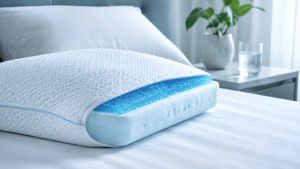
Memory foam mattresses are notorious for trapping heat. If you're a hot sleeper, consider a hybrid mattress with a latex or gel-infused layer, or add a breathable mattress topper. I once switched from a 12-inch memory foam to a mattress with a wool layer, and my skin temperature dropped by 3°F. The trade-off: wool toppers can be expensive and heavy, but they're naturally moisture-wicking and fire-resistant.
Seasonal and Humidity Adjustments
Summer and winter pose different challenges. In summer, high humidity makes it hard to cool down even at 65°F because sweat doesn't evaporate. Use a dehumidifier to keep indoor humidity between 40-50%. In winter, dry air can irritate your sinuses; a humidifier set to 40% can help you sleep better, but be careful not to over-humidify, which can lead to mold growth.
I've found that a simple hygrometer (under $10) is more useful than a thermostat. You can buy one at any hardware store. Monitor the humidity in your bedroom: if it's above 60%, run a dehumidifier for 30 minutes before bed. If it's below 30%, use a cool-mist humidifier. This adjustment alone can make a 2-3°F difference in perceived temperature.
Testing Your Own Optimal Temp: A Simple Protocol
If you don't have a wearable, you can still find your sweet spot with a pen and paper. For one week, record three things each morning: (1) the room temperature at bedtime, (2) how you felt when you woke up (on a scale of 1-10, with 10 being fully rested), and (3) any night sweats or chills. At the end of the week, look for the temperature that gave you the highest score. It's not perfect, but it's free and effective.
For a more precise approach, use a smart thermometer that tracks your bedroom temperature over the night. I've had clients discover that their room temperature dropped to 59°F at 3 AM (because the thermostat was in the hallway), and they were waking up cold. A simple space heater with a timer fixed the issue.
Common Mistakes and How to Avoid Them
Let me save you from the mistakes I've seen hundreds of times:
- Turning the thermostat too low before bed. Your body doesn't need the room temperature to drop until you're actually asleep. Set it to 68°F for the first hour, then drop to 65°F. This mimics the natural circadian rhythm.
- Using a heavy blanket with a low thermostat. You'll end up either too hot under the blanket or too cold outside it. Use a lighter blanket and adjust the room temperature instead.
- Ignoring the floor. Cold air sinks, so the floor can be 5-10°F colder than the air at bed height. If you're sleeping on a floor mattress, the temperature will be lower. Add a rug or an insulated pad.
- Drinking alcohol before bed. Alcohol lowers your core temperature initially but then causes a rebound effect, leading to night sweats and disrupted sleep. It's a sleep stage killer.
The Role of a Calm Bedtime Routine in Temperature Regulation
Your body's ability to cool down at night is influenced by your pre-sleep activities. A hot shower or bath 90 minutes before bed can actually lower your core temperature because it triggers a rebound cooling effect. But if you shower too close to bedtime, your body is still hot, and you'll struggle to fall asleep. For a comprehensive guide on winding down effectively, check out our article on Calm Bedtime Routine to Improve Sleep Quality. It pairs perfectly with temperature optimization-a cool room and a calm mind are the ultimate sleep cocktail.
When to See a Doctor
If you've optimized your bedroom temperature, bedding, and humidity, and you're still waking up exhausted or drenched in sweat, it might be a sign of an underlying issue. Sleep apnea, hyperthyroidism, or even a hormonal imbalance can cause night sweats and disrupted sleep. A sleep study can rule out these conditions. But most people can solve their temperature problems with the low-tech hacks I've shared here.
Final Thoughts: Your Temperature Is a Tool, Not a Rule
The best bedroom temperature for sleep is the one that lets you sleep through the night without waking up to adjust your covers. Start with the 60-67°F range, but don't be afraid to experiment. Use the 90-minute trial method, pay attention to your sleep stages, and adjust for your mattress and health. And remember: the air temperature is just one factor. The real magic happens when you combine the right room temperature with the right bedding, humidity, and pre-sleep routine.
I've seen people transform their sleep by simply switching from a polyester duvet to a linen one or by moving their bed away from a drafty window. You don't need a $500 smart thermostat-you just need to understand how your body and environment interact. Try one change at a time, measure the results, and you'll find your personal sweet spot. Sleep well.